
Table of Contents
Heads up: Some links in this post are affiliate links. If you buy through them, StealTheDecor may earn a small commission at no extra cost to you, and I only link products I have used or would buy again.
The first panel came off in my hand with a flake of beige paint stuck to the back. That was move-out week in my first apartment and my stomach dropped. Every wall in that place was the same flat builder beige and my lease said no paint and no nails. So I had covered one wall with peel and stick wallpaper and hoped for the best.
Two apartments later I have tested six kinds of wallpaper for renters on real rental walls. The list covers peel-and-stick vinyl strippable paste the wall paper fabric with liquid starch contact paper removable murals and washi tape. I tracked what stuck what bubbled and what came off cleanly at move-out because the security deposit is the whole point. I wanted a fresh look I could undo in an afternoon. Below you get the six types ranked a DIY install the brands I would buy again and exactly what I spent.
Quick Answer: The safest wallpaper for renters is low-tack peel and stick vinyl wallpaper from brands like Tempaper NuWallpaper or Threshold. Peel and stick vinyl wallpaper works best on smooth walls with satin or eggshell paint that has cured for at least 30 days. Peel and stick vinyl wallpaper usually removes cleanly when pulled slowly at a low angle. Renters should patch test a sample on a hidden spot for one week before covering a full accent wall.
What Is Renter Friendly Wallpaper and Why Do Renters Use It?
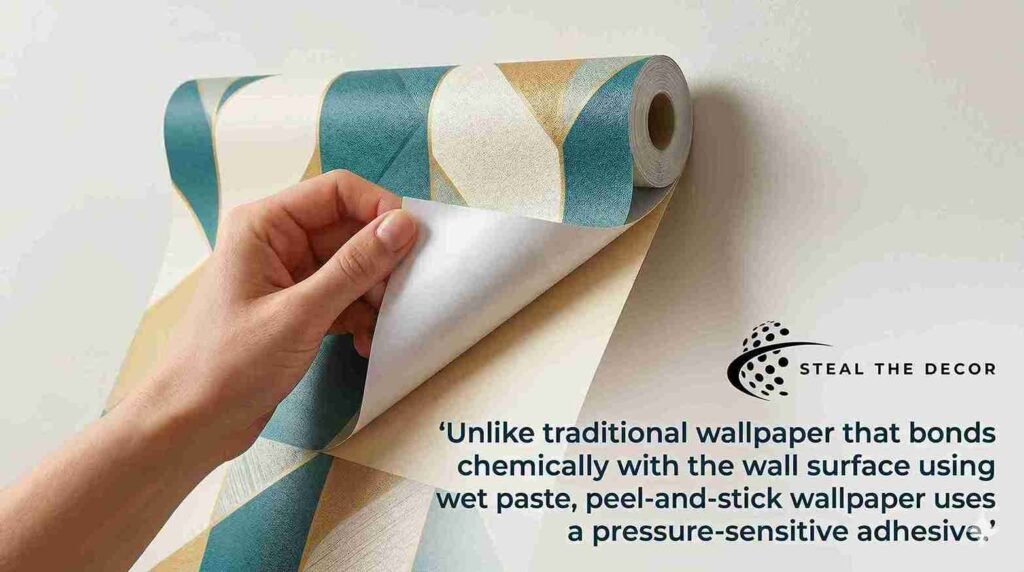
Renter friendly wallpaper is any wall covering that can be applied and removed without paint damage holes or sticky residue. The most common version is self-adhesive wallpaper also called peel and stick wallpaper. Some people call it renter-friendly wallpaper and the test is the same: it has to remove cleanly. It uses a pressure-sensitive adhesive that grips when you press it and lets go when you pull it slowly.
There are three main families: self adhesive vinyl with glue on the back strippable paste the wall wallpaper that comes off in dry sheets and fabric wallpaper held up with liquid starch that washes off with water.
Renters want this for one reason and it is the deposit. According to the U.S. Census Bureau’s 2024 Housing Vacancies and Homeownership Survey American rental households reached a record 45.3 million. Most of those leases ban paint and wall alterations. Mine did too which is why wallpaper for renters is the first wall project I tried.
Bottom line: renter friendly wallpaper is judged by how it comes off not by how pretty it looks on day one.
Does Wallpaper for Renters Actually Come Off Clean?
Yes most quality wallpaper for renters comes off clean when the wall and the paint cooperate. The brand matters less than most people think. Paint finish paint age and wall texture decide most of the result. I learned that when a flat latex wall gave up a quarter-size paint chip after two years under wallpaper.
It usually works if:
- The wall is smooth or has a very light texture.
- The paint is satin or eggshell because those finishes release adhesive cleanly.
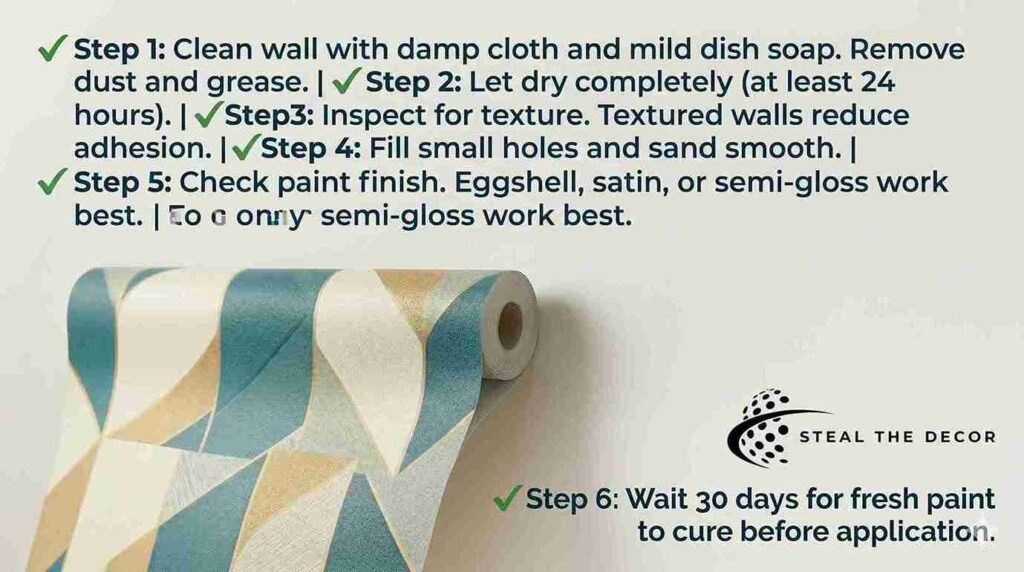
- The paint has cured for at least 30 days before you stick anything to it.
- You remove each panel slowly and keep it close to the wall as you pull.
It usually fails when:
- The wall has flat or matte paint which is porous and soaks up adhesive over time.
- The paint is fresh. I once applied wallpaper at 22 days and pulled paint off at removal.
- The wall has heavy orange peel texture a bumpy spray finish common in US apartments. The adhesive only touches the high points and lifts at the edges.
- The room is a steamy bathroom and the product is not bathroom rated.
If your walls feel like the skin of an orange read my tests on peel-and-stick on textured walls before you buy any wallpaper on textured walls. Some renters ask the landlord for a skim coat a thin layer of joint compound that smooths the wall. That is a permanent change and needs written approval.
Bottom line: test the paint first then pick the wallpaper.
6 Best Types of Wallpaper for Renters Ranked by Clean Removal
The best wallpaper for renters depends on your wall your room and how long you plan to stay. Here are the six types I have tried from most useful to most niche.
1. Peel-and-Stick Vinyl Wallpaper
Peel-and-stick vinyl wallpaper is the best all-around choice for smooth rental walls. It is repositionable during install and easy to clean with a damp cloth. This is the classic renter friendly peel and stick wallpaper and it comes in every style from botanical and floral wallpaper to wood grain and stripe wallpaper. My bedroom accent wall used NuWallpaper Peel and Stick Shiplap by NuWallpaper (around $29 a roll on Amazon). It stayed up two years and came off clean except one corner I stuck on a wall that was still damp.
- Damage risk: None on cured satin or eggshell paint.
- Best for: accent walls in bedrooms living rooms and an entryway.
2. Strippable Paste the Wall Wallpaper
Strippable non-woven wallpaper gives the most seamless look of any wallpaper for renters because it is real wallpaper hung with paste rolled onto the wall. It strips off in full dry sheets which keeps the wallpaper removable at move-out and leftover paste wipes away with warm water. I have not hung this type myself yet so this ranking comes from manufacturer instructions. Get landlord approval in writing first and check current prices since they vary a lot by brand.
- Damage risk: Minor residue which washes off.
- Best for: renters on a long lease who want a true wallpaper finish.
3. Fabric Wallpaper With Liquid Starch
Fabric wallpaper with liquid starch is the cheapest wallpaper for renters that removes with water alone. You brush starch on the wall smooth cotton fabric over it and brush more starch on top. At move-out the fabric peels away and a sponge with warm water lifts the starch. I did one full wall this way and loved the soft matte look. It took a whole afternoon though and the fabric creased at the corners where I rushed.
- Damage risk: None on satin paint.
- Best for: a kids room or nursery where a soft pattern fits.
4. Removable Wall Murals
Removable wall murals are one large self-adhesive image split into numbered panels. A mural is the boldest wallpaper for renters who want big wall art on one specific wall. In my test of six boho murals thin glossy vinyl showed every bump in the drywall. Fun kids room styles include safari animal scenes birds wallpaper and other animal peel and stick prints.
- Damage risk: None to minor residue.
- Best for: a statement wall behind a bed or sofa.
5. Contact Paper
Contact paper is thin self adhesive vinyl sold for shelves and drawers (usually under $15 a roll). It works for a bookshelf back or a dresser but it creases easily and the seams show on a full wall. I use contact paper on furniture not on walls.
- Damage risk: Minor residue on painted walls.
- Best for: small space accents and furniture makeovers.
6. Washi Tape Patterns
Washi tape is a low-tack removable decorative tape for stripes grids or faux frames. It is the lowest-risk wallpaper for renters here because the tape barely grips. It is not perfect for renters who want a bold look since it reads as tape up close and edges lift in dry winter air.
- Damage risk: None.
- Best for: renters who want a pattern with zero commitment.
If you want more ideas beyond print my list of rental-friendly accent wall ideas covers 15 other methods I have tested. And if you want real depth instead of a flat print rental-friendly wall paneling gives a 3D look that still comes down at move-out.
Styles that took off in 2025: The most popular renter-friendly prints I save on Pinterest are sage green botanical dark green chinoiserie vintage floral peel and stick designs and bold leopard or zebra prints. Beige stripes and textured vinyl suit calmer home decor.
Bottom line: peel-and-stick vinyl wins for most walls and fabric with starch wins when budget and clean removal matter most.
How to Put Up Wallpaper in a Rental Without Damage
Putting up peel and stick wallpaper in a rental takes about two to three hours for one accent wall and needs no special tools. You need your rolls a level a pencil a smoothing tool a sharp utility knife and a hair dryer for removal day. It is an easy install and a simple DIY weekend if you follow the order below.
Step 1: Check the Lease and the Paint
Get written approval from your landlord and ask for the paint finish and the last paint date. Common mistake: assuming “removable” means you do not need approval.
Step 2: Order Samples and Patch Test
Stick a wallpaper sample in a hidden spot for one week then peel it slowly and check for paint lift or sticky residue. Common mistake: buying six rolls before you know how your wall reacts.
Step 3: Clean and Dry the Wall
Your wallpaper needs a clean dry wall so wipe it with a damp cloth and mild dish soap. Let it dry for 24 to 48 hours and run the AC or a dehumidifier on humid days. Common mistake: sticking wallpaper on a wall that still feels cool or damp which traps moisture.
Step 4: Measure and Plan the Pattern Match
Divide your wall width by the panel width often 20.5 inches and round up. Add 10 to 15 percent extra or 20 percent for a large pattern repeat. Common mistake: forgetting that pattern matching eats material.
Step 5: Mark a Straight Starting Line
Use a level to draw a light pencil line from ceiling to floor one panel width from the corner since rental corners are rarely straight. Common mistake: lining up the first panel with the corner and ending up crooked by panel three.
Step 6: Apply From the Top With a Smoothing Tool
Peel about 12 inches of backing line the top up with your pencil line and press it on. Pull the backing down slowly while you sweep the smoothing tool from the center out to push air to the edges. Common mistake: trying to reposition a panel after about 30 seconds which stretches the vinyl.
Step 7: Trim Edges and Work Around Outlets
Trim at the ceiling and baseboard with a sharp utility knife and light pressure so the blade does not score the paint. Remove outlet plates first cut an X over each opening trim and replace the plate. Common mistake: using a dull blade that tears the wallpaper and scratches the wall.
Step 8: Remove It Slowly at Move-Out
Warm a top corner with a hair dryer on low for 15 to 20 seconds. Peel downward and keep the panel close to the wall as you pull working in 18 to 24 inch sections. Wipe any leftover adhesive with warm water and mild dish soap. Common mistake: yanking the panel straight out from the wall which is how paint gets pulled off.
Bottom line: slow clean and dry beats fast every single time.
Renter-Safe Wallpaper Brands I Actually Recommend
The best brands of wallpaper for renters pair a low-tack adhesive with vinyl thick enough to peel off in one piece. Good peel-and-stick wallpaper feels genuinely renter-friendly on removal day and these are the brands I have used or sampled.
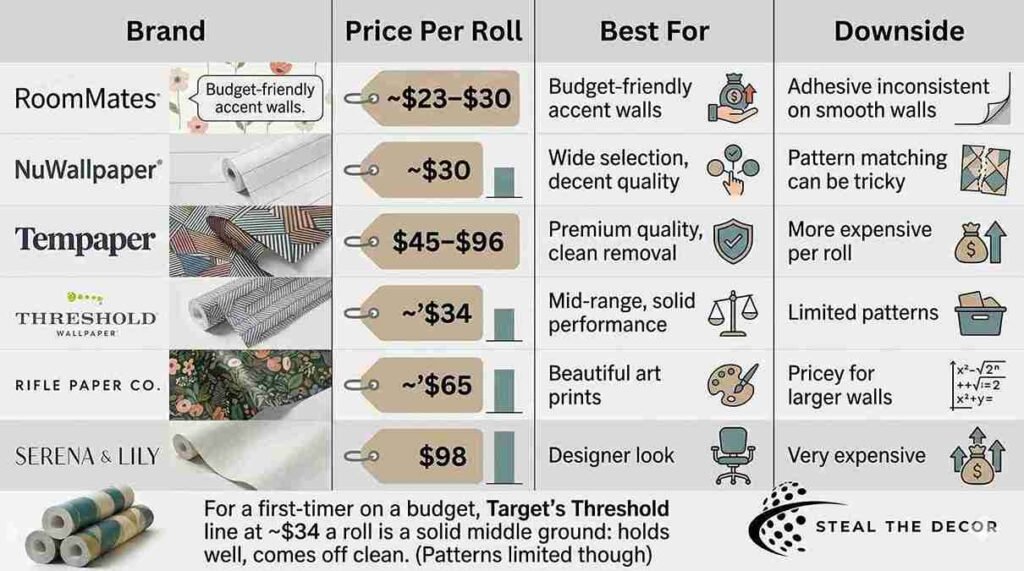
NuWallpaper Peel and Stick Shiplap by NuWallpaper (around $29 to $30 a roll). Good grip but pattern matching was fiddly on my third panel.
Tempaper Peel and Stick Wallpaper by Tempaper (typically $45 to $96 a roll). The premium pick for clean removal though the price adds up on a big wall.
Threshold Peel and Stick Wallpaper by Target (around $34 a roll). Clean removal in my hallway with a limited pattern range.
RoomMates Peel and Stick Wallpaper by RoomMates (around $23 to $30 a roll). Best for small spots but the adhesive felt inconsistent across rolls.
Chasing Paper Removable Wallpaper by Chasing Paper (premium tier check current price). Designer prints for a nursery. Sample only so far.
Wallshoppe Peel and Stick Wallpaper by Wallshoppe (premium tier check current price). Strong chinoiserie and floral peel and stick wallpaper designs. Sample only so far.
For kitchens and bathrooms choose moisture-resistant vinyl away from the spray zone. Behind a sink or stove a removable kitchen backsplash handles steam better than standard wallpaper.
| Product / Method | Price Range | Ease of Use (1 to 5) | Damage Risk | Best For | Our Rating |
|---|---|---|---|---|---|
| NuWallpaper Peel and Stick Shiplap by NuWallpaper | $29 to $30 per roll | 4/5 | None | Budget accent walls | 4.5/5 |
| Tempaper Peel and Stick Wallpaper by Tempaper | $45 to $96 per roll | 4/5 | None | Premium clean removal | 4.5/5 |
| Threshold Peel and Stick Wallpaper by Target | About $34 per roll | 4/5 | None | Hallways and small walls | 4/5 |
| RoomMates Peel and Stick Wallpaper by RoomMates | $23 to $30 per roll | 3/5 | Minor residue | Bookshelf backs and small spots | 3.5/5 |
| Chasing Paper Removable Wallpaper by Chasing Paper | Premium tier | 4/5 | None | Nursery and designer prints | Sample only |
| Wallshoppe Peel and Stick Wallpaper by Wallshoppe | Premium tier | 4/5 | None | Chinoiserie and vintage floral | Sample only |
Table note for design: set this table to scroll horizontally on mobile.
Bottom line: Tempaper is the premium pick and NuWallpaper is the best value for a first accent wall.
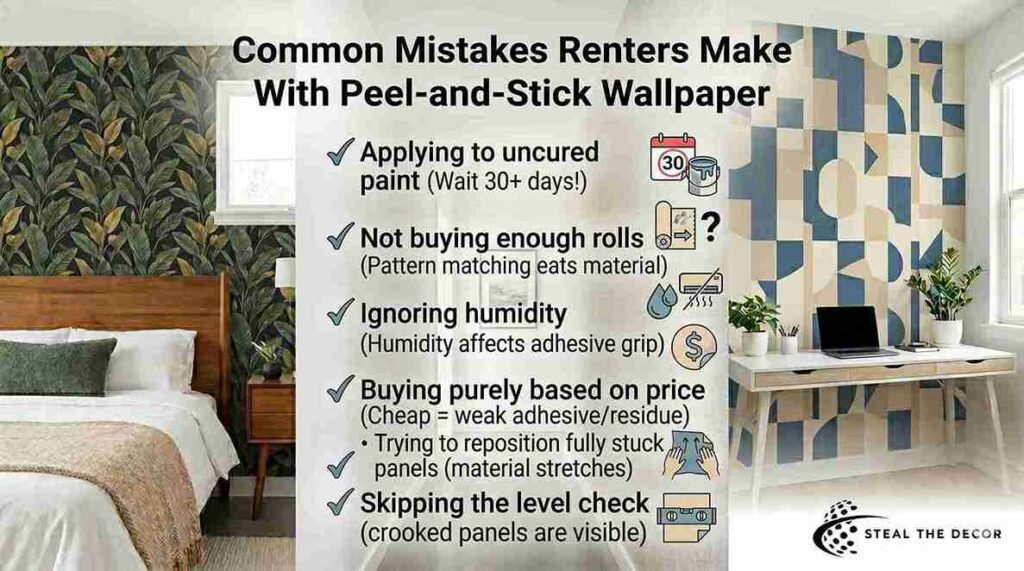
Common Mistakes Renters Make With Removable Wallpaper
Most renter wallpaper problems come from prep and patience not the product. Here is what trips most people up and I have made most of these myself.
Skipping the sample. A sample costs a few dollars and shows how your paint reacts before move-out day does.
Sticking wallpaper on fresh paint. New paint needs about 30 days to cure. I stuck a panel up at 22 days and pulled a quarter-size patch of paint off when I removed it. Ask your landlord when the wall was last painted and wait if you need to.
Using regular vinyl in a steamy bathroom. A friend in Atlanta found mold spots behind vinyl she had hung next to a shower with poor ventilation. Use a bathroom rated product on the wall farthest from the shower and run the fan.
Try this tonight: Tape a sample behind your couch set a phone reminder for seven days then peel it slowly and look at the paint. That one test answers most of your questions.
Pulling panels off fast at move-out. Speed rips the adhesive unevenly and can take paint with it so warm each panel and peel in sections.
Ignoring the pattern repeat. My shiplap print had a 21-inch repeat and lining it up meant trimming up to 8 inches off some panels. Check the repeat on the listing and buy one extra roll.
Bottom line: most wallpaper fails are prep fails so give the wall and the paint a week of your time before you buy.
What Should You Check With Your Landlord Before You Wallpaper?
You should get written approval and document the wall before any wallpaper goes up. Even damage free wallpaper for renters can count as an alteration under some leases. Run through this checklist first:
- Read the lease clause on alterations paint and wall decor.
- Email your landlord and describe the product as removable with no paint or nails.
- Ask which paint finish is on the walls and the date they were last painted.
- Take dated photos of every wall you plan to cover.
- Ask what condition the walls must be in at move-out.
- Ask who pays for touch-up paint if a small chip happens.
- Save the approval email with your lease.
Deposit rules vary by state but landlords generally cannot charge for normal wear and tear and they can charge for damage beyond it. FindLaw has a plain-English explainer on what landlords can deduct from a security deposit.
Bottom line: one email today protects your deposit a year from now.
Real Results: What I Spent on Renter Friendly Wallpaper
I spent about $222 on renter friendly wallpaper across three projects and got my full deposit back. Here is the breakdown:
- Bedroom accent wall (10 by 8 feet): 4 rolls of NuWallpaper Peel and Stick Shiplap about $116 from Amazon.
- Narrow hallway (12 by 3 feet): 2 rolls of Threshold Peel and Stick Wallpaper about $68 from Target.
- Home office half-wall (6 by 4 feet): 1 roll of RoomMates Peel and Stick Wallpaper about $24 from Walmart.
- UV-blocking window film for the bedroom: about $14 from Amazon.
The hallway was the best value I have found in wallpaper for renters a huge change for under $70.
What went wrong: afternoon sun faded the bedroom wall nearest the window by about half a shade until I added the window film. My cat left pinprick marks near the baseboard. And on the flat-paint wall in my first apartment one panel took a paint chip with it.
What went right: the finished bedroom wall became the backdrop for a gallery wall without nails and the whole setup came down clean in one afternoon.
Bottom line: most renters can wallpaper one accent wall for $70 to $120 and the real cost of a mistake is the deposit not the rolls.
Wallpaper for Renters FAQ
What is the best wallpaper for renters?
The best wallpaper for renters is low-tack peel and stick vinyl wallpaper from brands like Tempaper NuWallpaper or Threshold. Peel and stick vinyl wallpaper applies without paste and usually removes cleanly from satin or eggshell paint. Budget renters can start with NuWallpaper at around $30 a roll while Tempaper is the premium pick.
Can you put wallpaper up in a rental apartment?
Yes renters can put wallpaper up in a rental apartment when the wallpaper is removable and the landlord approves it in writing. Peel and stick wallpaper fabric with liquid starch and washi tape patterns are the most common rental safe wallpaper options. Always check the lease clause on alterations first.
Does peel and stick wallpaper damage walls or paint?
Peel and stick wallpaper usually does not damage walls when the paint is satin or eggshell and has cured for at least 30 days. Damage happens most often on flat paint fresh paint or when panels are pulled off fast. A one week patch test with a sample shows the risk before you commit.
Does peel and stick wallpaper work on textured walls?
Peel and stick wallpaper works poorly on textured walls because the adhesive only grips the raised points. Light orange peel texture sometimes holds with thick vinyl but edges often lift within months. Heavy knockdown texture should be skipped. Fabric with liquid starch or a mural on a smoother wall is a safer choice.
How much does it cost to wallpaper an accent wall in a rental?
Wallpapering one rental accent wall usually costs $70 to $120 with mid-range peel and stick wallpaper. My 10 by 8 foot bedroom wall took 4 rolls of NuWallpaper for about $116. Premium brands like Tempaper can double that cost. Most renters find one accent wall is worth the money.
How do you remove peel and stick wallpaper without damaging paint?
Remove peel and stick wallpaper by warming each panel with a hair dryer on low for 15 to 20 seconds. Peel downward slowly and keep the panel close to the wall. Work in 18 to 24 inch sections. Wipe any leftover adhesive with warm water and mild dish soap on a soft cloth.
What should you do if removable wallpaper pulls off paint?
If removable wallpaper pulls off paint stop peeling and warm the next section longer with a hair dryer before you continue. Photograph the chip and tell your landlord early. A small chip can often be fixed with matching touch-up paint which many landlords prefer over a deposit deduction.
Key Takeaways
- Low-tack peel and stick vinyl wallpaper from Tempaper NuWallpaper or Threshold is the safest wallpaper for renters with smooth painted walls.
- Satin and eggshell paint that has cured for 30 days releases peel and stick wallpaper more cleanly than flat or matte paint.
- A one week patch test with a wallpaper sample in a hidden spot is the best way for renters to check for paint damage before buying full rolls.
- Fabric wallpaper held up with liquid starch is the lowest-cost temporary wallpaper for renters because the starch washes off the wall with warm water.
- One rental accent wall of about 80 square feet usually costs $70 to $120 in mid-range peel and stick wallpaper.
- StealTheDecor recommends removing peel and stick wallpaper slowly at a low angle with a hair dryer on low to protect the security deposit.
Wrapping Up
Those builder-beige walls are long gone and my deposit came back in full. Check your paint before you pick a pattern and go slow on removal day. Removable wallpaper for renters is not magic but it is the fastest renter friendly decor upgrade I know.
Have you tried no damage wallpaper for apartments yet? Tell me which room you started with or which mistake you made in the comments. When you are ready for your next wall a faux brick wall for renters is my favorite project for adding texture without paint.
Every product I rated is one I have tried myself. Start with a sample and one wall and let your rental surprise you.
6 thoughts on “Wallpaper for Renters: 6 Removable Types I Tested”