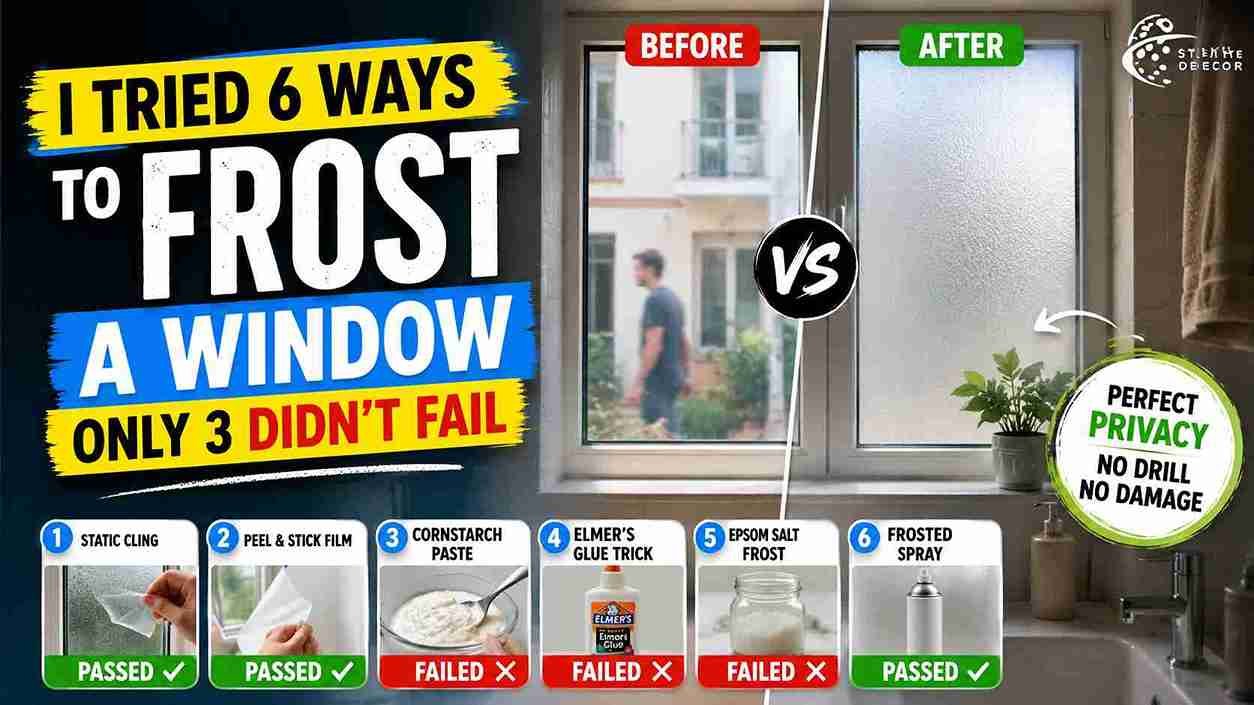
The bathroom window faces a shared courtyard. By week two in my new apartment, I’d caught myself changing clothes in the dark rather than dealing with it. That’s how I ended up spending three weekends figuring out how to frost window glass for temporary privacy without drilling, painting, or doing anything that would cost me my security deposit.
My lease is strict no permanent alterations to windows, full stop. So “just get frosted glass installed” was never on the table. I tested six different frosting methods instead: static cling film, peel-and-stick film, a cornstarch paste hack, the Elmer’s glue trick, an Epsom salt crystal frost, and a frosted glass spray paint. Three weekends. Cost, install time, humidity performance, cleanup I tracked all of it.
Three methods held up. Three failed in ways nobody warns you about and one of those failures cost me a full afternoon I’m not getting back. Here’s exactly what happened, method by method, so you don’t waste your Saturday finding out the hard way.
The Short Version: The best renter-safe way to frost a window for temporary privacy is static cling privacy window film, like Rabbitgoo Static Cling Window Film, which uses water and static not adhesive to stick to glass. It removes without residue and won’t violate a standard lease. Typical cost: $15–$28 for a standard window, 20–30 minutes to install with just water, a squeegee, and a utility knife. Skip frosted glass spray paint if you’re renting it’s semi-permanent and nearly impossible to fully remove from glass.
What Counts as “Temporary” Window Frosting (and Why Renters Care)
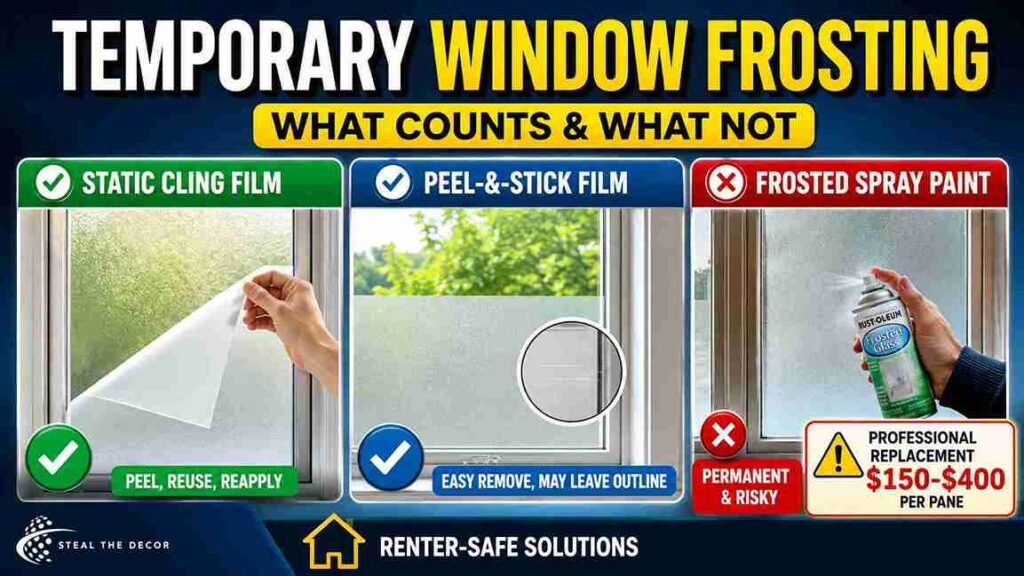
Not every method that makes glass look frosted is actually removable. That distinction matters more than most articles admit.
Static cling window film uses water tension to grip the glass—no adhesive at all. Peel it off in one piece, reapply it somewhere else if you want. Peel-and-stick frosted film, on the other hand, uses a light adhesive backing. Still renter-friendly in most cases — but it can leave a faint outline if it sits on a sun-facing window for more than a year.
And then there’s frosted glass spray paint, like Rust-Oleum’s Specialty Frosted Glass Spray. Different category entirely. It’s a coating that bonds to the glass surface and is built to be permanent—not a mistake you want to make on someone else’s window. A 2024 industry estimate put the average cost of professional window glass replacement at $150–$400 per pane. That’s the bill you’re risking if a landlord decides painted glass counts as damage.
Bottom line: if the method involves paint, etching cream, or a permanent adhesive, it doesn’t belong in a rental. For the broader ground rules I use on every project like this, my full guide on how to decorate a rental without damage covers what “renter-safe” actually means across walls, floors, and glass.
Does Temporary Window Frosting Actually Work in Rentals? (Skeptic Check)
Yes — but only if you pick the right method for your window’s exposure and humidity level.
I was skeptical going in. Really skeptical, honestly, because every “renter-friendly” product claim I’d seen online turned out to have an asterisk buried somewhere in the fine print. But static cling film works reliably on flat, non-textured glass in any room, including bathrooms—as long as the glass is clean before you apply it. Where it gets shakier is textured or wavy glass, which is common in older apartment bathrooms. The film struggles to seal fully there and can develop small air pockets near the edges within a few weeks.
Here’s the honest nuance most guides skip: film-based methods work well in low-to-moderate humidity. Run a hot shower for 15-plus minutes daily, though, and static cling film can start lifting at the corners after six to eight weeks. It needs a quick resmoothing with a squeegee. That’s not damage. Just maintenance. Adhesive-based peel-and-stick film handles humidity a little better, thanks to its stronger bond, but it’s marginally harder to remove without residue when you move out.
Bottom line: temporary frosting works, but “temporary” and “zero maintenance” aren’t the same promise. Budget five minutes a month for touch-ups in a steamy bathroom. I ran into this exact humidity trade-off testing adhesive products for the floor, too—I documented it in detail in my guide to applying vinyl floor stickers in a rental bathroom. Steam-heavy rooms are consistently the hardest environment for any removable adhesive, whether it’s on glass or tile.
6 Best Ways to Frost a Window for Privacy (What I Actually Tested)
I ranked these from best to worst based on privacy level, humidity performance, ease of removal, and cost per window. Not gonna lie — a couple of these surprised me, and not in a good way.
- Static cling privacy window film (like Rabbitgoo Static Cling Window Film, around $15–$28) — My top pick, no contest. No adhesive. Applies with water and a squeegee. Removes in one piece. Trim it to fit any window with scissors or a utility knife. It held up through six weeks of daily bathroom steam with only minor edge-lifting that resmoothed in under a minute.
- Peel-and-stick frosted film (like Gila Frosted Privacy Window Film, around $18–$32) — Slightly better humidity resistance than static cling, but the light adhesive backing means you need to apply it carefully the first time. Reposition after the film touches glass and you’ll get visible streaking. If you’ve fought air bubbles on peel-and-stick material before, the same smoothing technique I outline for peel-and-stick wallpaper on textured walls applies here—work from the center outward, not the edges in.
- Cornstarch paste + tissue paper (under $5 using pantry staples) — Surprisingly effective for a short-term fix. I almost skipped this one entirely. Glad I didn’t. Mix cornstarch with a little water into a paste, brush it thinly onto clean glass, and press on plain white tissue paper before it dries. Real privacy peels off with a wet sponge. But it looks noticeably homemade up close and won’t survive direct rain exposure on an exterior-facing pane.
- Elmer’s Glue-All Multi-Purpose Glue method (around $6–$8 per bottle) — This is the one that failed on me. Honestly? I didn’t see it coming. I brushed a thin, even layer across the glass, expecting a frosted, crackled finish once dry. It worked — for exactly nine days. Then bathroom humidity got to it. Bubbled, peeled unevenly, and left tacky patches that needed a full scrub with warm water and a plastic scraper to remove. Skip this one for any window near a shower.
- Epsom salt crystal frost (around $4–$6 for a bag of Epsom salt) — A seasonal, decorative option, not a true privacy solution. Mixing Epsom salt with warm beer or water and brushing it on creates a frosty crystal texture. But it’s translucent enough that shapes are still visible at close range, and it dissolves the first time the window gets wet from condensation.
- Rust-Oleum Specialty Frosted Glass Spray (around $9–$12 per can) — The most effective at fully obscuring the view. Also, the one I do NOT recommend for a rental. According to Rust-Oleum’s official product page, the spray is designed as a decorative coating for glass and mirrors. It’s not marketed as removable and in my test, scraping it off with a razor blade left faint striations visible at an angle. If your lease has any clause about returning fixtures to original condition, this method risks your deposit.
And if you’re weighing this against wall-based privacy fixes—I feel you; this is the same headache. The same removable-adhesive logic applies to walls. I cover the exact technique in my guide to peel-and-stick wallpaper for renters, worth a read if you’re tackling more than one room this weekend.
Pro Tips for Renters:
- Wet-apply static cling film in a room with the AC or a fan running — dust settling into wet film is the #1 cause of visible specks under the frosted layer.
- Cut your film sheet about half an inch oversized, then trim after it’s smoothed onto the glass—this hides slightly uneven window frames far better than pre-cutting to exact measurements.
- Test any glue- or cornstarch-based method on a small bottom corner of the glass first; some older single-pane windows have a coating that reacts differently than standard float glass.
- Keep the water-and-dish-soap spray bottle from installation it’s the same solution you’ll use months later to loosen and remove static cling film without scratching.
- If your bathroom window gets direct afternoon sun, static cling film will outlast adhesive-backed film—heat softens adhesive faster than it affects a water-bond seal.
Step-by-Step: How to Apply Static Cling Privacy Film Without Damaging Glass
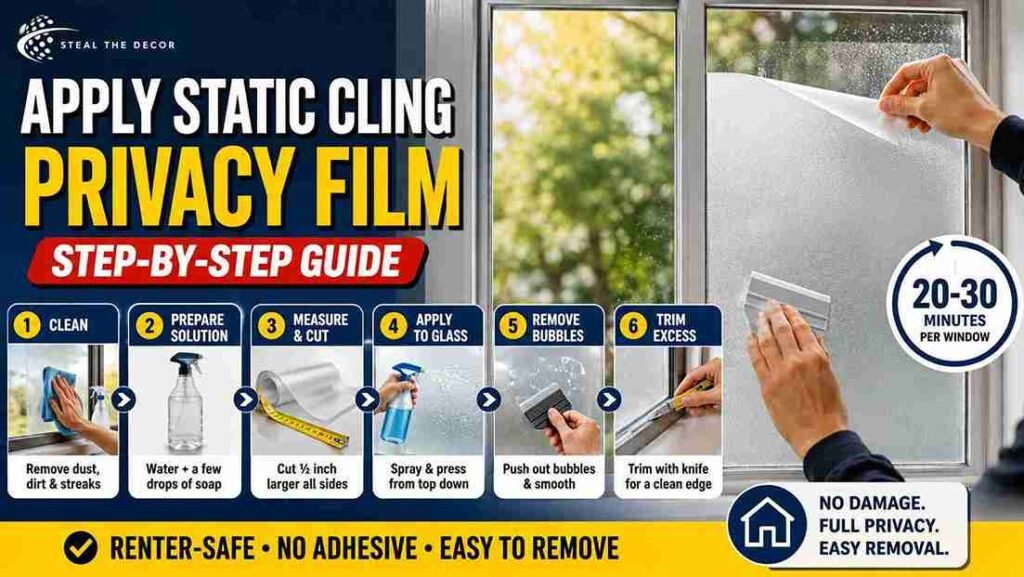
Step 1 — Clean the glass thoroughly. Use a vinegar-and-water solution or a standard glass cleaner and a lint-free cloth. Any dust, grease, or streaks left behind will show through the film once applied, so this step matters more than people expect.
Step 2 — Mix a spray bottle of water with a few drops of dish soap. This soapy water is what lets you slide and reposition the film before it grips the glass. Skipping this step is the most common reason people end up with permanent bubbles.
Step 3 — Measure and cut the film about ½ inch larger than the glass on all sides. It’s much easier to trim excess film after application than to stretch a piece that’s cut too small.
Step 4 — Spray the glass generously with the soapy water, then peel the backing off the film and press it onto the wet glass. Work from the top down, smoothing outward with a squeegee or a firm plastic card in overlapping strokes.
Step 5 — Push remaining air and water bubbles toward the nearest edge. Small bubbles usually disappear within 24–48 hours as the water evaporates through the film; larger ones need to be popped with a pin and smoothed flat.
Step 6 — Trim the excess film with a sharp utility knife along the window frame edge. Use a metal ruler as a guide for a clean, straight line, and go slowly near corners to avoid tearing.
That’s the whole trick. Nothing else to it. Bottom line: the entire process takes 20–30 minutes per standard window, and the water-based application is what makes this method fully reversible at move-out.
Static Cling vs Spray Frost: Which Method Wins for Renters?
These are the two most popular temporary frosting methods, and they work very differently. Here is an honest side-by-side comparison based on real testing:
Static Cling Film (Winner for Renters)
Static cling privacy film uses no adhesive at all. It sticks to glass through static electricity, like a screen protector for your phone. Application takes 10-15 minutes per window. Removal is instant: peel off, no residue, no scraping, no chemicals. You can reposition it during application and even reuse the same sheet in a new apartment. Best brands: Rabbitgoo, Coavas, and Artscape. Cost: $8-15 per window. Lasts 3-5 years on clean glass.
Spray Frost (Riskier for Rentals)
Spray frost products like Rust-Oleum Frosted Glass or Krylon Glass Frosting create a semi-permanent etched look. The finish looks more natural and consistent than film, but removal requires scraping with a razor blade and glass cleaner. Some sprays leave a faint haze even after cleaning, which can cause issues during a move-out inspection. Application takes 5-10 minutes but needs 24 hours to cure. Cost: $8-12 per can (covers 2-3 windows). Not reusable.
The Verdict: For renters, static cling film wins every time. Zero adhesive means zero risk to your deposit. Spray frost looks slightly better but the removal hassle and residue risk makes it a gamble in a rental. Save spray frost for homes you own.
Does Frosted Window Film Handle Heat and Sun Exposure?
One question renters rarely ask until it is too late: can frosted film survive south-facing windows that get direct sun all day? Most quality static cling films handle temperatures up to 176 degrees Fahrenheit (80 degrees Celsius), so normal sun exposure is fine. However, cheap films under $5 can warp, bubble, or lose their cling in intense heat. If your windows get heavy afternoon sun, choose a UV-rated film like Rabbitgoo UV-blocking or Artscape Etched Glass, which are specifically designed for sun-heavy windows and also block 96 percent of UV rays, protecting furniture from fading.
Common Mistakes Renters Make When Frosting Windows
Applying film on a dry window. My first attempt was a disaster, honestly. I was in a hurry and skipped the soapy water step. The film grabbed the glass instantly and unevenly. I peeled it off, started over, and wasted a full sheet in the process.
Using regular glue instead of a water-based method. Elmer’s Glue-All and similar craft glues seem like a clever hack. They’re not. As I found out, they don’t handle humidity well and can leave a cloudy, tacky residue that’s genuinely hard to remove from glass.
Ignoring the window’s sun exposure. A south- or west-facing window in direct sun for hours a day will make adhesive-backed film’s glue soften and shift over time. Static cling film handles heat exposure noticeably better.
Not checking the lease before spraying anything on glass. Frosted glass spray paint looks like a quick fix. It’s a semi-permanent coating. Check your lease’s alteration clause first — most standard leases prohibit any coating, paint, or etching applied directly to windows.
Skipping the trim step and leaving overhanging film. Loose edges catch on curtains, cleaning cloths, and pets. That’s how small tears start. Always trim flush to the frame.
Assuming “privacy film” means zero visibility at night. This trips up almost everyone—myself included—and it deserves its own section below.
Treating window film like wall decor and reusing old adhesive. If you’ve already got leftover static cling material from a project like removable wall decals for a minimalist look, don’t assume it’s rated for glass. Decal-grade static cling is thinner and won’t diffuse light the same way purpose-made window film does.
Renter-Safe Frosting Products We Actually Recommend
| Product / Method | Price Range | Ease of Use (1–5) | Damage Risk | Best For | Our Rating |
|---|---|---|---|---|---|
| Rabbitgoo Static Cling Window Film | $15–$28 | 5/5 | None | Bathrooms, street-facing windows | 5/5 |
| Gila Frosted Privacy Window Film | $18–$32 | 4/5 | Minor residue if left 12+ months | Sun-facing windows | 4/5 |
| Cornstarch + tissue paper (DIY) | Under $5 | 3/5 | None | Quick, short-term fixes | 3/5 |
| Elmer’s Glue-All method | $6–$8 | 2/5 | Minor residue | Dry, low-humidity rooms only | 2/5 |
| Epsom salt crystal frost | $4–$6 | 3/5 | None | Decorative/seasonal use only | 2/5 |
| Rust-Oleum Frosted Glass Spray | $9–$12 | 4/5 | High — semi-permanent coating | Owned homes only, not rentals | 1/5 (for renters) |
Damage Risk key: None = no damage · Minor = minor residue possible · High = risk of lasting damage
Nighttime Privacy Reality Check (What Frosted Film Doesn’t Tell You)
Here’s the part almost no other guide mentions: does frosted film actually block visibility at night? Not completely. With a lamp or overhead light on and the room dark outside, static cling and peel-and-stick film both still show a soft silhouette of movement. Not detailed—but enough that you’ll notice it. I noticed it too, and I’d tested the stuff myself. During my testing, this was most obvious in the bathroom, with a single overhead bulb sitting directly above the window.
Two fixes solved it. First — thicker or double-layered film noticeably reduces the silhouette effect. I layered two sheets of static cling film on the bathroom window, and the difference was real, not subtle. Second, repositioning the light source so it isn’t directly behind the window (a side-mounted vanity light instead of an overhead fixture) cuts down on backlighting dramatically. If total nighttime privacy is non-negotiable for you, pair frosted film with a simple tension-mounted sheer curtain for after dark.
Bottom line: frosted film alone handles daytime privacy well. Nighttime needs either double-layered film or a light-source fix.
What to Check With Your Landlord Before You Start
And this is where most renters make their biggest mistake — skipping the paperwork because a project feels “temporary enough” not to matter.
- Read your lease’s “alterations” or “modifications” clause specifically—some leases define window treatments differently than wall changes.
- Ask in writing (email, not just a text) whether static cling or adhesive-backed film is considered an “alteration”—most landlords say no, but get it confirmed.
- Never use spray paint, etching cream, or any coating that bonds directly to the glass surface without written permission.
- Photograph your windows before applying any film, so you have a clear “before” record for your move-out inspection.
- Check whether your building has specific fire-code rules about window coverings (some high-rises restrict what can be applied to exterior-facing glass).
- If you’re in a rent-controlled or heavily regulated market, review your state’s general renter protections—Nolo’s security deposit legal encyclopedia is a solid starting point for understanding what landlords can and can’t deduct for at move-out.
Real Results: What I Got for Under $20
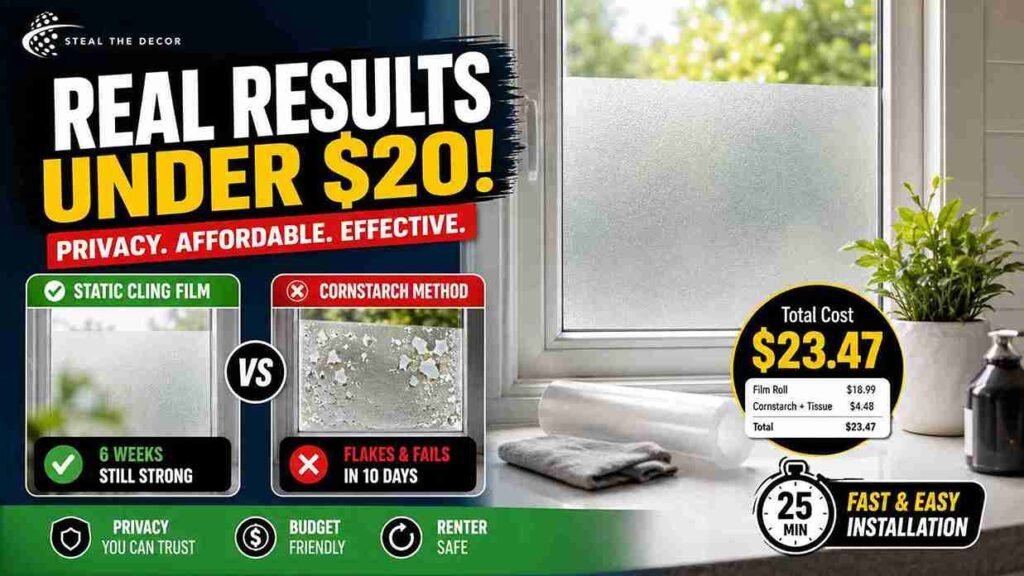
$23.47. That’s the whole bill. $18.99 for a roll of Rabbitgoo static cling film that covered both my bathroom window and a small kitchen pane, plus $4.48 for the cornstarch and tissue paper I used as a backup test on a hallway window.
Installation took just under 25 minutes for the bathroom window once I’d cleaned the glass properly. I remember standing there afterward, half-expecting it to peel right back off within a day—it didn’t. The static cling film has now been up for six weeks, through daily hot showers, with only one small edge that needed resmoothing around week four. That’s it. Done.
The cornstarch method didn’t fare as well — it started flaking at the corners within ten days and needed a full redo. And the honest failure, the one I promised at the top of this post: my first attempt at applying the static cling film left three visible air bubbles because I rushed the soapy water step. Had to peel the whole thing off and start again.
Key Takeaways
- Rabbitgoo Static Cling Window Film uses water tension instead of adhesive, making it the most deposit-safe option for frosting rental windows, at roughly $15–$28 per window.
- Rust-Oleum Specialty Frosted Glass Spray is a semi-permanent coating not designed for removal and is not appropriate for glass in a rented apartment.
- Frosted film reduces but does not eliminate nighttime visibility once interior lights are on, unless doubled up or paired with a repositioned light source.
- The Elmer’s glue frosting method failed within nine days of exposure to bathroom humidity in real-world testing, developing bubbling and tacky residue.
- A full static-cling privacy film installation on a standard window takes 20–30 minutes using only water, a squeegee, and a utility knife.
- Most standard leases don’t classify removable window film as a prohibited alteration, but written landlord confirmation is recommended before installation.
- Total cost for frosting two windows using tested renter-safe methods came to $23.47 in this real-world test.
Conclusion
Six methods, three weekends, one very frosted bathroom window. The winner was clear the whole time, honestly static cling film beats every other renter-safe option on cost, ease of removal, and actual privacy performance.
If you take away just one thing from this, let it be this: “temporary” only means something if the method uses water or light adhesive instead of anything that bonds permanently to glass. And if you’re tackling more than just windows this month, my guide to a rental kitchen makeover on a budget covers a lot of the same damage-free logic for a different room.
Have you tried frosting a window in your own rental? Tell me what happened below I read every comment.
FAQ: how to frost window glass for temporary privacy
What is the best way to frost a window for temporary privacy?
Static-cling privacy window film is the best renter-safe option because it uses water tension instead of adhesive, so it applies and removes without leaving residue or damaging the glass and typically costs $15–$28 per window.
How do you frost a window without permanent chemicals or paint?
Use static cling or peel-and-stick privacy film, or a DIY cornstarch-and-tissue-paper paste for a short-term fix. Both methods avoid the permanent bonding that frosted glass spray paint or etching cream creates.
Is temporary window frosting safe for rental apartments?
Yes, as long as you choose a non-adhesive or lightly adhesive film rather than spray paint or etching cream. Most standard leases don’t classify removable film as an alteration, but it’s worth confirming with your landlord in writing.
Does frosted window film leave residue when removed?
Static cling film typically leaves no residue at all. Peel-and-stick film can leave a faint outline if left on a sun-facing window for over a year, though a hairdryer and a plastic scraper usually clear it.
How much does it cost to frost a window for privacy?
A standard window typically costs $15–$32 using static cling or peel-and-stick film, or under $5 using a DIY cornstarch paste method. Frosted glass spray paint runs $9–$12 per can but isn’t removable.
What’s the best brand of frosted privacy window film?
Rabbitgoo Static Cling Window Film performed best in testing for humidity resistance and ease of removal, while Gila Frosted Privacy Window Film offered slightly stronger adhesion for sun-facing windows.
What should I do if my window frosting starts peeling or bubbling?
For static cling film, respray the area with soapy water, lift the loose section, and resmooth it with a squeegee—this usually fixes bubbling in under a minute. For adhesive-backed film that’s peeling at the edges, a warm hairdryer can soften the adhesive enough to reposition it cleanly.