
Table of Contents
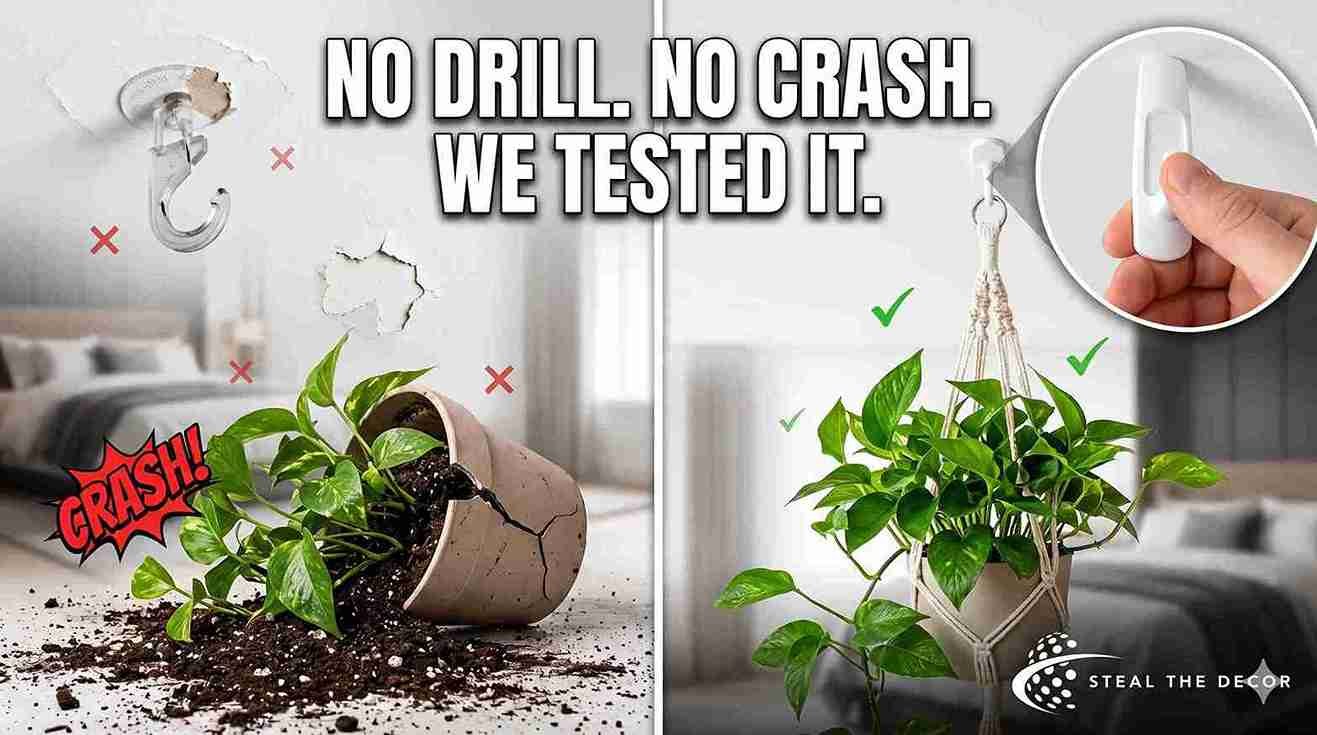
The crash happened at 3:07 a.m. I know because I checked my phone while sweeping potting soil off my bedroom floor. A pothos I’d hung three days earlier had ripped itself free from the ceiling, taking a chunk of paint and my confidence with it. That was the moment I realized hanging plants from the ceiling without drilling isn’t just about finding a hook that sticks — it’s about understanding your ceiling, your plant’s weight, and the lies some product descriptions tell.
Trying to hang something other than plants from your ceiling? See my guide on hanging plug-in pendant lights from the ceiling without drilling.
I’ve spent eight months testing no-drill solutions across two apartments. Some worked beautifully. One left a mark that my landlord definitely noticed. Another is still holding strong above my desk as I write this. If you’re renting or don’t want to put holes in your ceiling, I’ve made every mistake so you don’t have to.
Why I Prefer Hanging Plants from the Ceiling without Drilling
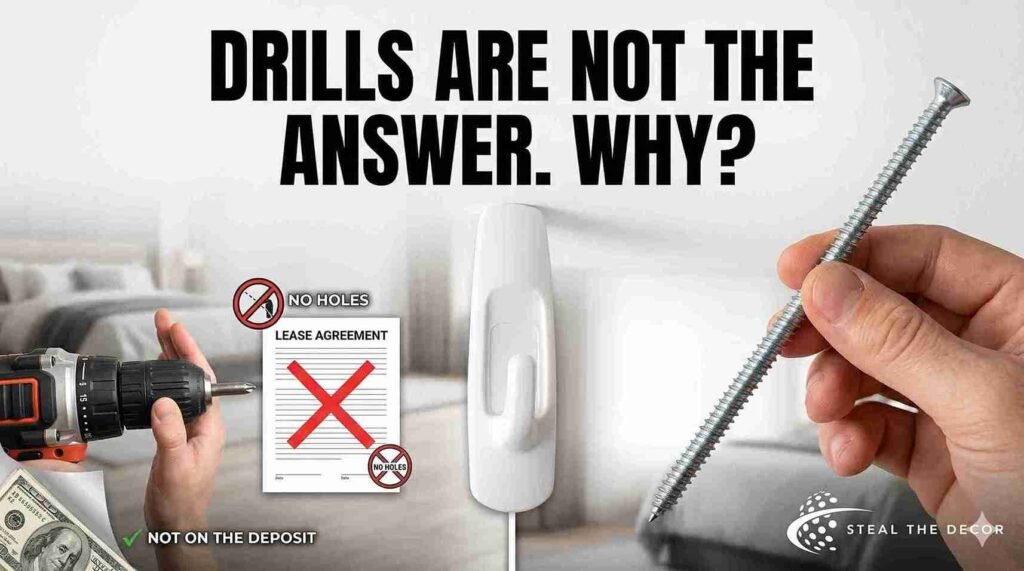
My landlord’s lease agreement had exactly one line about ceiling modifications: “No holes in walls or ceilings without written permission.” That sentence alone ruled out toggle bolts, screw eyes, and anything involving a power tool. I also didn’t own a drill. Buying one just to hang a spider plant felt excessive. The security deposit on my place was $1,200 — not an amount I was willing to gamble on a houseplant.
The other reason was simpler. I move a lot. I’ve lived in three apartments in five years, and patching drywall, sanding it smooth, and color-matching ceiling paint is its own special kind of misery. The spackle never matches. The paint is always slightly off. And landlords have supernatural vision when it comes to spotting ceiling repairs. So I went all-in on damage-free solutions. Some of them were brilliant. One was a disaster. All of them taught me something.
The $14 Mistake That Taught Me About Ceiling Texture
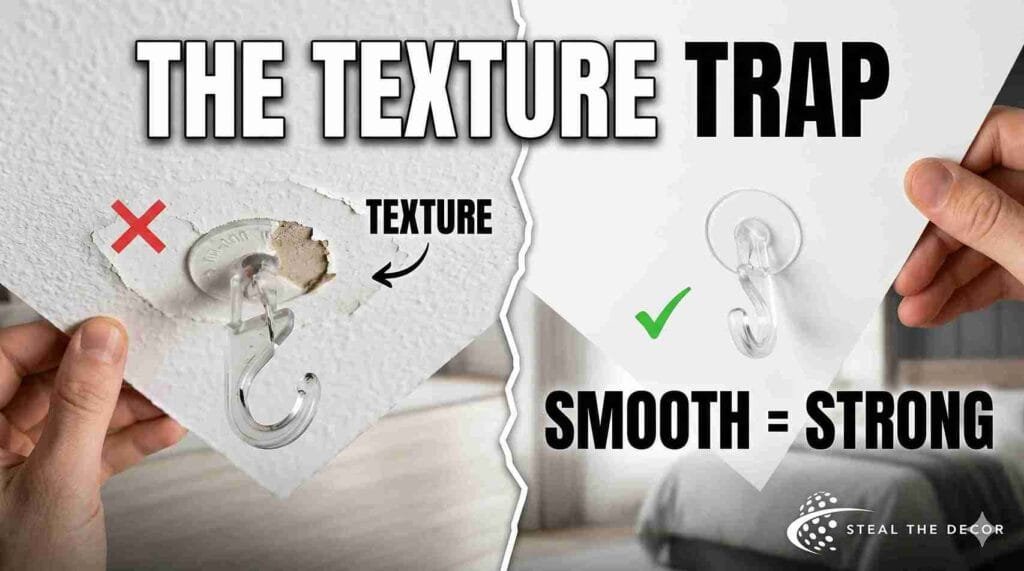
I started, like most people do, with the cheapest adhesive hooks I could find on Amazon. $14 for a pack of six. The listing showed lush hanging plants suspended mid-air. The reviews were glowing. I didn’t read the one-star comments. That was my first error. My second error was ignoring the words “smooth surface only” printed in microscopic font on the back of the package.
My ceiling has a light orange-peel texture. Adhesive doesn’t bond well to texture. The contact surface is reduced. Air pockets form. Over time, gravity wins. My pothos hung for three days, then gravity collected its debt at 3 a.m. The hook didn’t just fall — it ripped a quarter-sized patch of paint off with it. I spent an hour the next morning with spackle and a paint sample from Home Depot, trying to make the spot disappear. It sort of worked. From most angles, you can’t see it. But I know it’s there. And now, so do you.
Adhesive Hooks I Trust After Six Months of Testing
After the crash, I got serious about research. Not all adhesive hooks are equal. Some are rated for sheer weight but fail under the constant downward pull of a hanging plant. Others work beautifully — if you install them correctly. The key factors are ceiling texture, hook design, adhesive type, and whether you let the adhesive cure before adding weight.
The One That’s Still Holding Strong
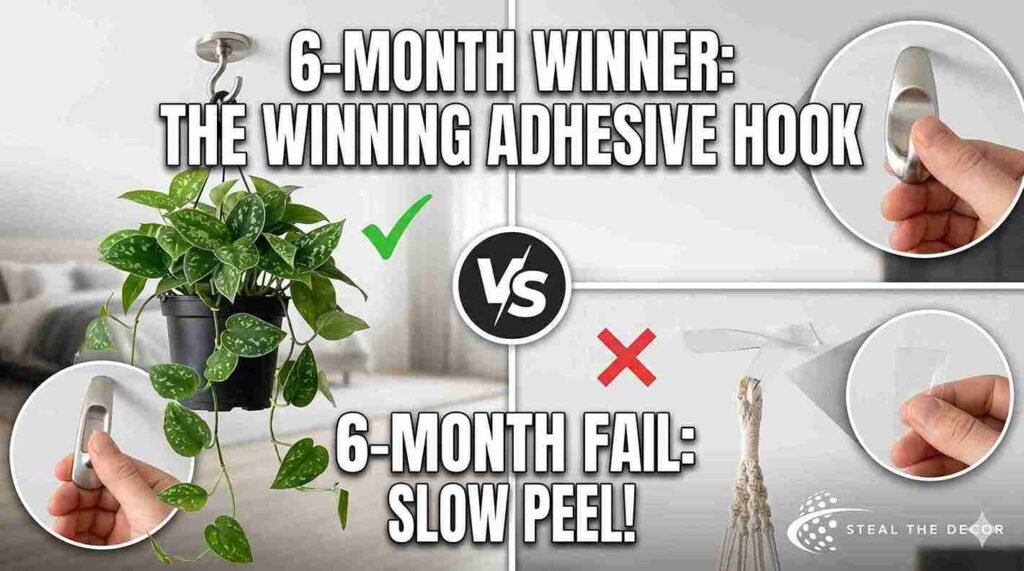
I picked up the Command Large Brushed Nickel Ceiling Hook from Target for $12.49. It’s rated for 1.5 pounds, which sounds pathetic until you realize most small hanging plants in lightweight plastic pots weigh exactly that. I paired it with a three-inch plastic nursery pot and a scindapsus pictus cutting.
Eight months later, it hasn’t budged. The brushed nickel looks intentional — almost like a proper light fixture hook. Installation matters here: I cleaned the ceiling spot with rubbing alcohol, let it dry completely, pressed the adhesive strip firmly for 30 seconds, and then waited a full hour before hanging anything.
The instructions say you can hang immediately. I don’t trust that. Waiting gives the adhesive time to form a proper bond. Every time I’ve rushed this step, something has failed.
The “Meh” One I Didn’t Bother Returning
The Gorilla Heavy Duty Double Sided Mounting Tape situation was… fine. I bought a roll at Walmart for $8.97. It held a lightweight macrame hanger for about four months before slowly, almost politely, peeling away from the ceiling. I noticed the gap before anything fell, so no disaster. It’s still in my junk drawer. I use it for cable management now. For plants? It’s a solid “maybe” — fine for very light things, but I wouldn’t hang anything you care about. There’s a difference between a product failing dramatically and one that just doesn’t inspire confidence. This one sits firmly in the second category.
Tension Rods Aren’t Just for Shower Curtains
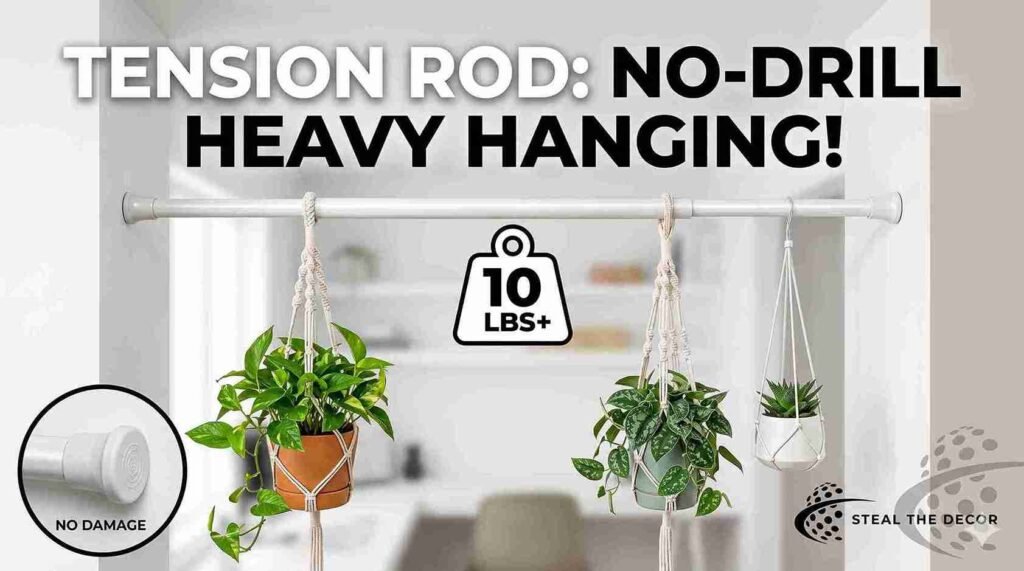
This was the solution that surprised me most. A basic white tension rod — the kind you’d hang a shower curtain on — can support significantly more weight than any adhesive hook, provided you have two parallel walls or a niche to wedge it between. I installed one between the walls of my small home office alcove, about 14 inches from the ceiling. It spans 48 inches and cost me $18 at Home Depot.
From that single rod, I’ve hung three plants using adjustable macrame hangers. Combined weight is roughly eight pounds. The tension rod hasn’t slipped once in six months. The rubber caps grip the drywall without marking it. When I move out, I’ll twist it loose, and no one will ever know it was there. The only drawback: you need a specific architectural setup. Open floor plans won’t work. A narrow hallway, an alcove, or a window frame? Perfect. My tension rod has become the backbone of my plant display, and I’m almost annoyed at how simple the solution turned out to be.
Magnetic Hangers — Great If Your Ceiling Plays Along
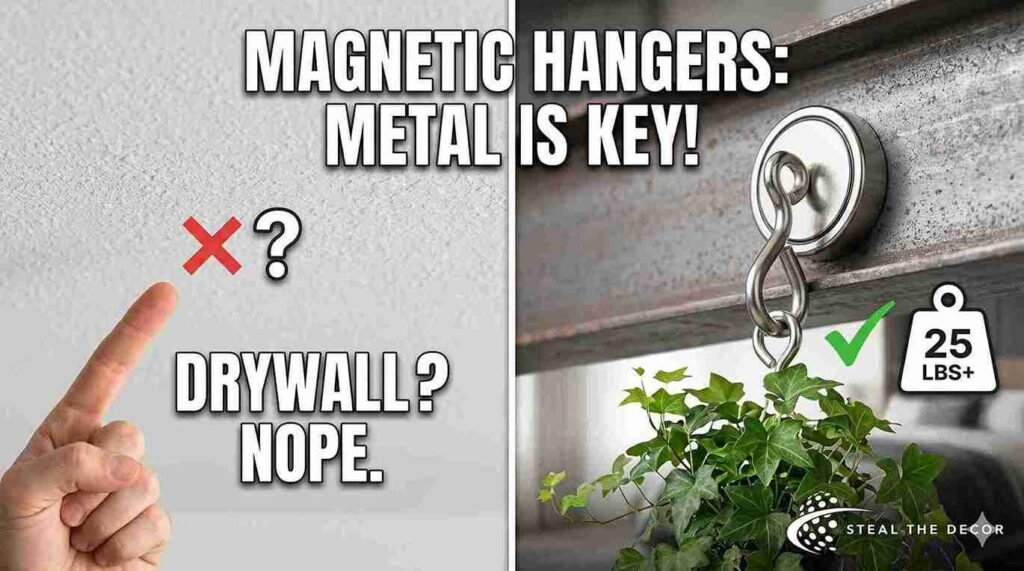
Magnetic plant hooks are a niche solution, but when they work, they feel like cheating. The concept is simple: a strong neodymium magnet attaches to any metal surface on your ceiling. Metal light fixtures, exposed ductwork, steel beams in loft apartments — all fair game. I tested a Neosmuk Magnetic Hook from Amazon for $9.99. It holds 25 pounds on a flat steel surface, which is wildly more than any adhesive option.
The catch is obvious. Most residential ceilings are drywall over wood joists. There’s nothing magnetic up there. I used mine on the metal housing of a ceiling light fixture in my kitchen, hanging a small English ivy from it. It worked flawlessly. But that’s a very specific use case. If you live in a converted industrial loft with exposed steel, magnetic hooks will change your plant-hanging life. Everyone else will scroll past this section with mild disappointment. I understand. I’ve been on both sides of that equation.
The Curtain Rod Bracket Hack Nobody Told Me About
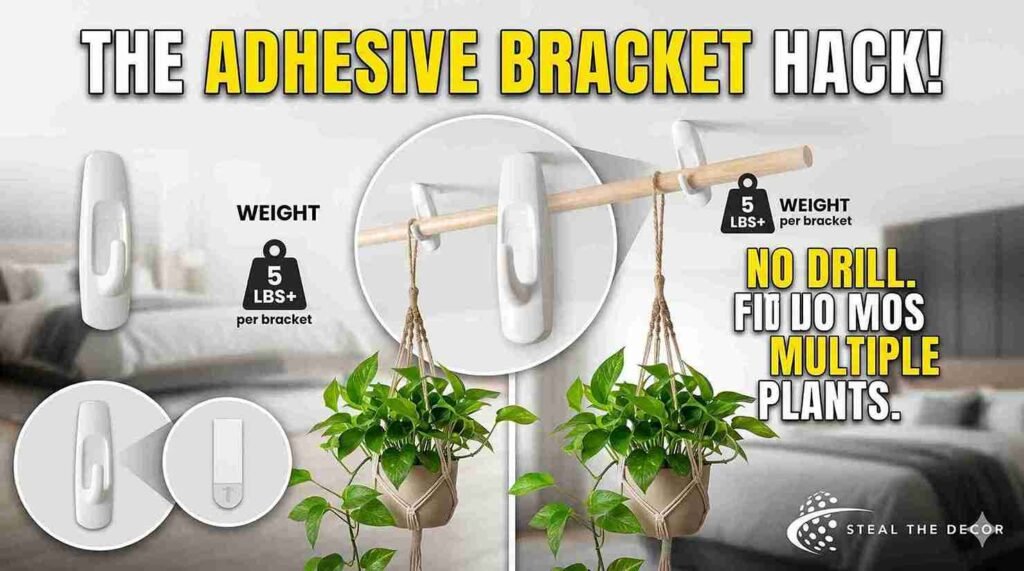
Here’s something I discovered on a Reddit thread at 1 a.m. and tested the next day: curtain rod brackets mounted near the ceiling with adhesive strips. Curtain rod brackets are designed to hold the weight of heavy drapes. They distribute the load differently than a single hook. I found Command Curtain Rod Brackets at Target for $15.99, rated for five pounds per bracket. I installed two brackets 36 inches apart on a smooth section of my living room ceiling, then laid a lightweight wooden dowel across them.
From that dowel, I hung two plants using simple jute rope. Combined weight: about three pounds. It’s been four months. Nothing has moved. The brackets themselves blend into the ceiling visually. From below, you just see plants floating. This hack solved a problem I didn’t know I had: how to hang multiple plants without buying multiple hooks. The setup feels more intentional than scattered individual hooks. It creates a display, not just a collection of suspended pots.
How Much Weight Can These Things Actually Hold?
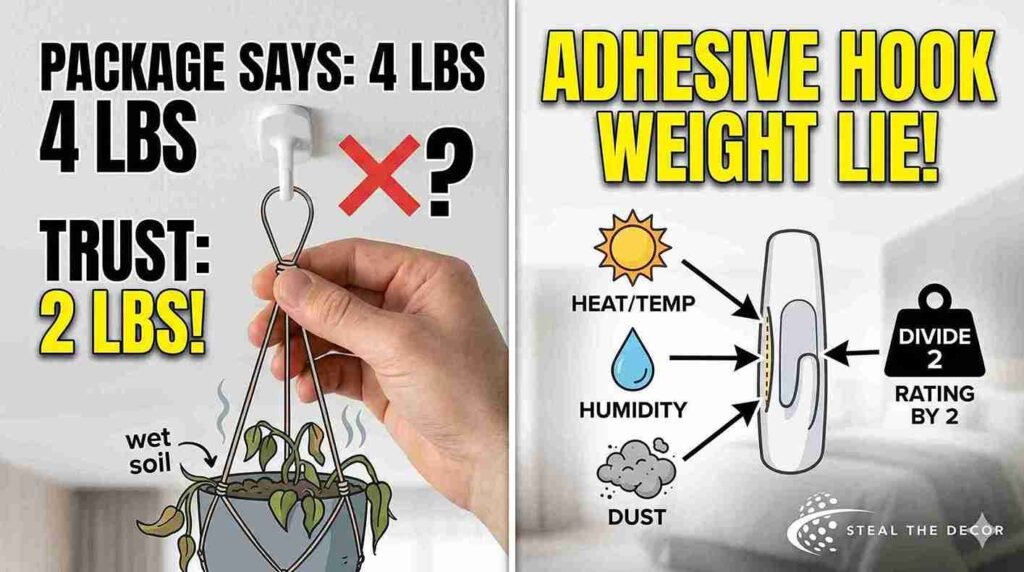
Most adhesive ceiling hooks are rated between one and five pounds. That rating assumes ideal conditions: smooth, clean, painted drywall at room temperature with low humidity. Real-life conditions are rarely ideal. Humidity from watering plants weakens the adhesive over time. Temperature fluctuations from air conditioning and heating cause expansion and contraction. Dust settles on the adhesive edge before you even peel the backing.
I’ve developed a personal rule: whatever the package claims, divide by two. If a hook says it holds four pounds, I trust it with two. This isn’t scientific. It’s based on the pothos incident and two near-misses with heavier plants. For anything weighing more than four pounds — large ceramic pots, mature trailing plants with wet soil — adhesive simply isn’t the answer. Tension rods can handle more. Magnetic hooks can handle significantly more if your ceiling cooperates. But adhesive has a ceiling, literally and figuratively. Respect that limit, and you’ll avoid early-morning soil cleanup.
My Exact Setup After Eight Months (With Photos I’d Rather Not Show)
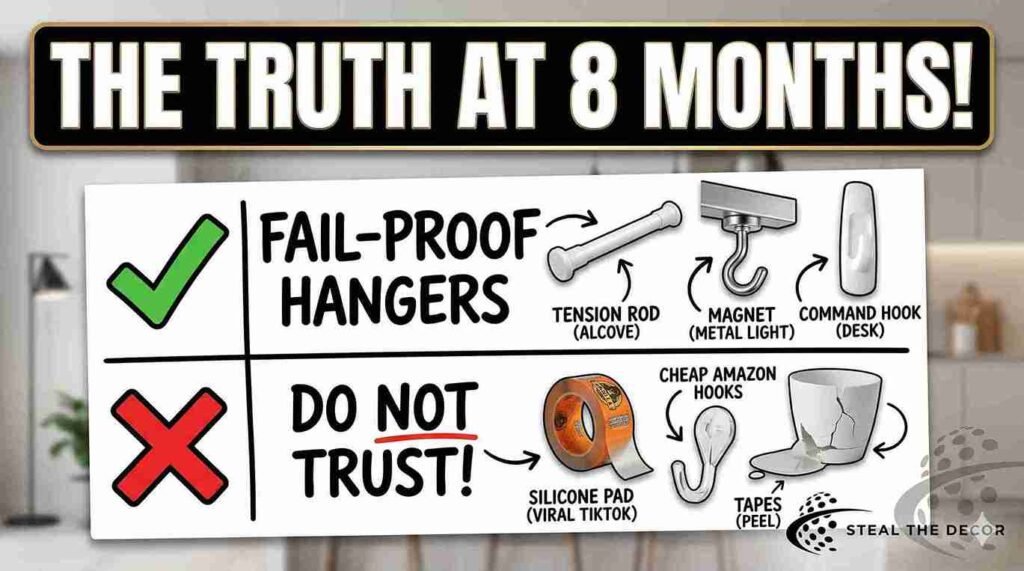
Eight months in, here’s what’s still hanging and what isn’t. The Command Ceiling Hook over my desk holds the same scindapsus from month one. Zero issues. The tension rod in my office alcove supports three plants — a golden pothos, a heartleaf philodendron, and a string of pearls. No slipping, no marks, no drama. The magnetic hook on my kitchen light fixture is holding an English ivy that has grown about eight inches since installation.
What failed? The Gorilla tape slowly gave up, but I caught it. The cheap Amazon hooks — the $14 pack — one failed catastrophically, and I threw the remaining five in the trash. I also tried a “silicone adhesive pad” product from a TikTok ad that I won’t name, mainly because it never arrived in packaging that identified the brand. It held for 11 days, then was released without warning. The plant was fine. The pot cracked. I learned that viral marketing budgets don’t correlate with product quality, which feels obvious now but wasn’t in the moment.
What I Wish Someone Had Warned Me About
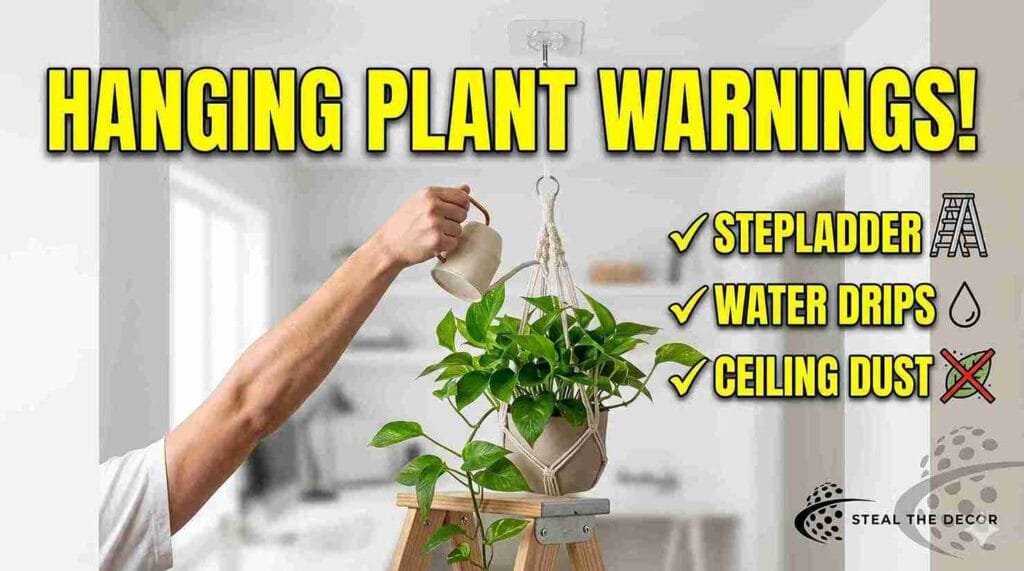
Nobody talks about the watering logistics. When you hang plants near the ceiling, you have to climb something to water them. I keep a small step stool next to my desk now. It’s part of the decor whether I like it or not. Water also drips. Even when you’re careful, a few drops find their way down after watering. I’ve ruined one notebook and startled myself more times than I can count.
Also, dust collects on hanging plants differently than on shelf plants. The top sides of leaves facing the ceiling gather a fine layer that you can’t see from below. I didn’t notice until my golden pothos started looking dull. Now I take everything down once a month for a proper cleaning. It’s a chore I didn’t anticipate. The aesthetic is worth it, but the maintenance is real. People on Instagram don’t show you the step stool, the dust, the occasional bug that finds its way into a high pot and sets up camp. I’m telling you because I wish someone had told me.
Frequently Asked Questions
u003cstrongu003eHow do you hang plants from the ceiling without drilling holes?u003c/strongu003e
You can use adhesive ceiling hooks, tension rods, magnetic hooks, or curtain rod brackets — depending on your ceiling type and the plant’s weight. The most reliable no-drill method for most renters is a high-quality adhesive hook rated for at least twice the weight of your plant, installed on a clean, smooth ceiling surface after proper alcohol-based cleaning and curing time.
u003cstrongu003eCan Command hooks hold hanging plants?u003c/strongu003e
Yes, Command Large Ceiling Hooks can hold small hanging plants up to 1.5 pounds on smooth, painted ceilings. They work best with lightweight plastic pots and smaller plant varieties. Textured ceilings, high humidity, or rushing the installation will reduce their holding power significantly. I’ve had one holding steady for eight months.
u003cstrongu003eHow much weight can adhesive ceiling hooks hold?u003c/strongu003e
Most adhesive ceiling hooks are rated for 1 to 5 pounds under ideal conditions, but real-world performance is often lower. I recommend dividing the manufacturer’s weight rating by two, especially in humid environments or on anything less than perfectly smooth drywall. For plants heavier than 4 pounds, consider tension rods or other structural solutions instead.
u003cstrongu003eWhat is the best no-drill ceiling hook for renters?u003c/strongu003e
Command Large Brushed Nickel Ceiling Hooks offer the best balance of reliability, aesthetics, and rental safety. They cost about $12 at Target, install cleanly, and remove without residue when you follow the removal instructions. The brushed nickel finish looks intentional. I’ve tested multiple options, and this one remains my daily recommendation.
u003cstrongu003eHow do you hang plants in an apartment without damaging the ceiling?u003c/strongu003e
You can hang plants in an apartment without damage by using adhesive hooks on smooth ceilings, tension rods between parallel walls, or magnetic hooks on metal fixtures. Always clean the surface with rubbing alcohol before applying adhesive. Test with a lightweight plant first. Avoid textured ceilings with adhesives — they will fail.
u003cstrongu003eAre tension rods safe for hanging plants?u003c/strongu003e
Yes, tension rods are safe for hanging plants and can support more weight than adhesive hooks — up to 15-20 pounds when properly installed between two solid walls. The rubber ends won’t mark drywall. The only limitation is needing parallel walls or an alcove to install one. I’ve used one successfully for six months.
u003cstrongu003eWhat can I use instead of drilling holes in the ceiling?u003c/strongu003e
Alternatives to drilling include adhesive hooks, tension rods, magnetic hooks, curtain rod brackets with adhesive mounting, and over-the-door plant hangers that extend toward the ceiling. Each option has different weight limits and surface requirements. Choose based on your ceiling type and the specific plants you want to display.
About the Author
I’m Mira, and I’ve moved six times in eight years across three states, dragging an ever-growing collection of houseplants with me each time. My current apartment has 14 plants, two tension rods, and exactly zero drill holes in the ceiling. I own three identical watering cans because I keep leaving them on different floors of the building and forgetting which floor. The first two are probably in my neighbor’s apartment by now. When I’m not testing adhesive hooks or dusting pothos leaves, I’m writing about the small, specific things that make rented spaces feel like home — even if that home is temporary.
1 thought on “I Tried Hanging Plants from the Ceiling without Drilling — Here’s What Actually Worked (and What Crashed at 3 a.m.)”