

Table of Contents
Two feet of counter. That was the whole workspace in my first apartment kitchen and the toaster already owned half of it. Every morning started with the same shuffle of moving the kettle to reach the mugs and moving the mugs to reach the sugar. My lease says no drilling no paint no permanent shelving so the pretty built in setups all over Pinterest were never happening for me.
Over three weekends and about $180 of trial and error I built and lived with eleven different small space coffee bar ideas across a rental kitchen a hallway wall and a studio apartment corner. Some held for months. One dumped a full canister of beans on the floor at 6 a.m. Here is what worked what it cost and how to set up a coffee station that comes down clean on move out day.
Quick Answer: A small space coffee bar needs only three things: a defined surface vertical storage above or beside it and one coffee maker sized to the space. The IKEA RASKOG utility cart a 24 inch console table and a set of adhesive floating shelves are the three most renter friendly bases running roughly $35 to $90. None of the three requires drilling so a security deposit stays safe.
What a Small Space Coffee Bar Is and Why Renters Want One
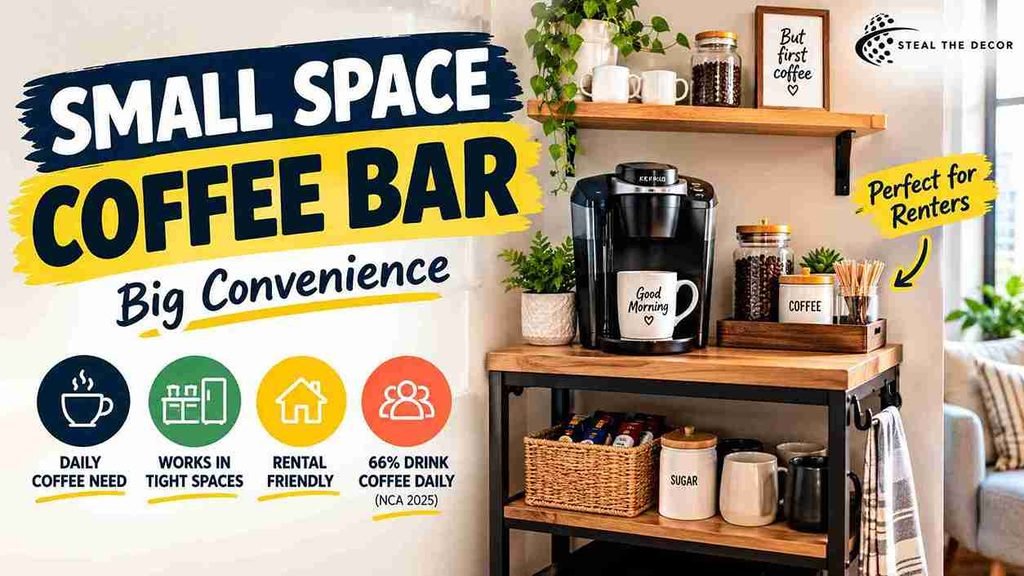
A small space coffee bar is any dedicated coffee area under about 30 inches wide that holds a coffee maker mugs and coffee supplies in one spot instead of spreading them across a kitchen. The surface can be a section of countertop a rolling cart a console table or a fold down wall shelf. The point is not decoration. The point is that every coffee making item lives in one place so the morning takes one trip instead of four.
Renters want one for a practical reason. Apartment kitchens give you limited counter space and almost no say over cabinetry so a designated coffee zone is the cheapest way to make a rental kitchen work harder. It also pulls the coffee mess off the main kitchen counter which matters a lot in a studio apartment where the kitchen is also the dining room.
Demand for this is not small. According to the National Coffee Association Fall 2025 National Coffee Data Trends report 66 percent of American adults drink coffee every day and 82 percent of past day drinkers had it at home. A home coffee station is not a luxury project. It is a daily use station most of us already need.
Bottom line: a coffee bar is a storage fix first and a pretty corner second.
Does a Coffee Station Really Work in a Tiny Rental Kitchen?
Yes a coffee station works in a tiny rental kitchen as long as the base is freestanding or adhesive mounted and the setup stays under about 30 inches wide. I ran three separate versions in a galley kitchen with 24 inches of free counter and none of them cost me a wall repair.
Here is the honest works if and does not work when split.
It works if you have at least one of these: a 15 by 24 inch patch of floor beside the fridge a bare wall section above an outlet an empty upper cabinet shelf or the end of a counter run. It also works if your coffee maker is compact meaning a pod machine a pour over cone a French press or a small espresso machine rather than a full size drip brewer with a bean hopper.
It does not work well when the only free wall is textured plaster or old paint since adhesive shelves and hooks slip on rough surfaces and tend to peel paint on removal. It also struggles in a kitchen with no outlet within 6 feet of the spot because running an extension cord across a walkway is a trip hazard and most leases discourage it.
I tried the wall mounted coffee station version first in an apartment with orange peel texture which is the bumpy sprayed finish common in rental drywall. The adhesive shelf held for nine days and then let go with two mugs on it. The same shelf on smooth painted drywall in the next apartment held for eight months.
Bottom line: check your wall texture and your outlet distance before you buy anything.
11 Small Space Coffee Bar Ideas That Fit a Rental
The best small coffee bar setups fall into five groups: rolling carts counter trays wall shelves repurposed furniture and hidden drawer stations. Below are the eleven I built with real prices from when I bought them and a plain damage risk rating for each.
1. The rolling cart coffee station
A three tier utility cart is the most flexible coffee cart for a small apartment because it stores upward instead of outward. The IKEA RASKOG utility cart (typically $40 to $50) takes a footprint of about 13 by 20 inches and holds a pod machine on top mugs in the middle and coffee beans plus filters on the bottom. I kept mine beside the fridge and rolled it to the outlet each morning. Damage risk: none.
2. The budget rolling cart swap
If the RASKOG is out of stock the Simple Houseware 3 Tier Rolling Cart (typically $28 to $40) does the same job in a slimmer metal frame. The shelves are shallower so a full size coffee machine hangs over the edge. I used mine for a pour over setup with a Chemex and a gooseneck kettle and it was steadier than it looked. Damage risk: none.
3. The tiered tray counter station
A two tier tiered tray turns 12 inches of counter into a full coffee corner. Mine held a Bodum Chambord French press two coffee canisters and a small dish of sugar packets and stirrers on the top shelf. Trays like this run about $20 to $35 in bamboo or metal. This is the best compact coffee station idea for anyone who cannot give up floor space at all. Damage risk: none.
4. The adhesive floating shelf pair
Two shelves mounted with heavy duty adhesive strips create a wall mounted coffee station without a single hole. I used Command Picture Hanging Strips by 3M which the brand rates up to 20 pounds per set on the large size under a 24 inch shelf board and kept the load to mugs and a coffee canister only. The 3M Command site publishes weight limits by product and staying under the stated limit is the whole trick. Damage risk: minor residue.
5. The mug rack wall
Adhesive hooks in a 3 by 3 grid hold nine favorite mugs on vertical space that was doing nothing. This frees an entire cabinet shelf and doubles as the focal point of the coffee area. I paid about $12 for the hooks and hung them 7 inches apart so the handles cleared. Damage risk: minor residue.
6. The narrow console table bar
A 30 inch console table behind a sofa or against a hallway wall becomes a freestanding coffee bar with zero kitchen footprint. Mine was a $60 secondhand find and the drawer held spoons sweetener and pods while the surface held the machine. This is the move for a studio apartment where the kitchen has no spare inch. Damage risk: none.
7. The repurposed nightstand nook
Repurpose a small nightstand or a two drawer file cabinet into a coffee nook for about $0 if you already own one. The drawer hides coffee grounds filters and a scale and the top holds the machine and a bud vase. I put a cutting board on top of mine to protect the finish from heat and drips. Damage risk: none.
8. The over the door organizer station
An over the door organizer on a pantry door stores pods syrup bottles and paper cups in pockets that would otherwise eat shelf space. It costs around $15 to $25 and needs no hardware at all since it hangs on the door top. Pair it with any counter setup as the overflow storage. Damage risk: none.
9. The upper cabinet coffee zone
Clear one upper cabinet directly above your machine and make it coffee and tea only. Two shelves hold mugs on the lower one and coffee supplies on the top shelf and the cabinet door hides the clutter completely. This is the tucked away option for anyone who wants no visible coffee bar at all. Damage risk: none.
10. The tension rod side rail
A tension rod fitted between two cabinet sides or inside a narrow gap holds S hooks for mugs measuring spoons and a small strainer. Tension mounted hardware presses rather than pierces so nothing touches the wall surface. I paid $9 for the rod and hooks together. Damage risk: none.
11. The fold down wall shelf
A fold down shelf bracket gives you a real coffee making surface that disappears when it is not in use. This one is the exception in this list because it does need screws so it only works if your landlord approves it in writing. I tested it in a unit where the landlord agreed to holes in exchange for me patching on exit. Damage risk: risk of paint damage.
Setting up a coffee nook usually pushes people to fix the wall behind it too and a removable kitchen backsplash is the fastest way to stop splatter without paint. If the whole kitchen needs help not just the coffee corner start with the rental kitchen makeover on a budget breakdown instead.
Bottom line: pick your base by what you have spare floor counter or wall and the rest of the build is easy.
Pro Tips for Renters:
- Put a silicone mat or a cutting board under the machine because coffee rings on a rental countertop are a deposit problem and the mat costs about $8.
- Mount adhesive shelves at least 4 inches away from the stove side since heat and steam soften adhesive faster than weight does.
- Weigh your mugs before you load a wall shelf. Ten stoneware mugs can pass 15 pounds which is over the limit for most adhesive strips.
- Buy a cart with locking casters because a rolling cart station that drifts while you press a French press plunger is genuinely annoying.
- Leave the machine unplugged at the cart and plug in only when brewing. Fewer cords crossing a small kitchen means fewer snags.
How to Set Up a Coffee Bar Without Damaging Your Rental
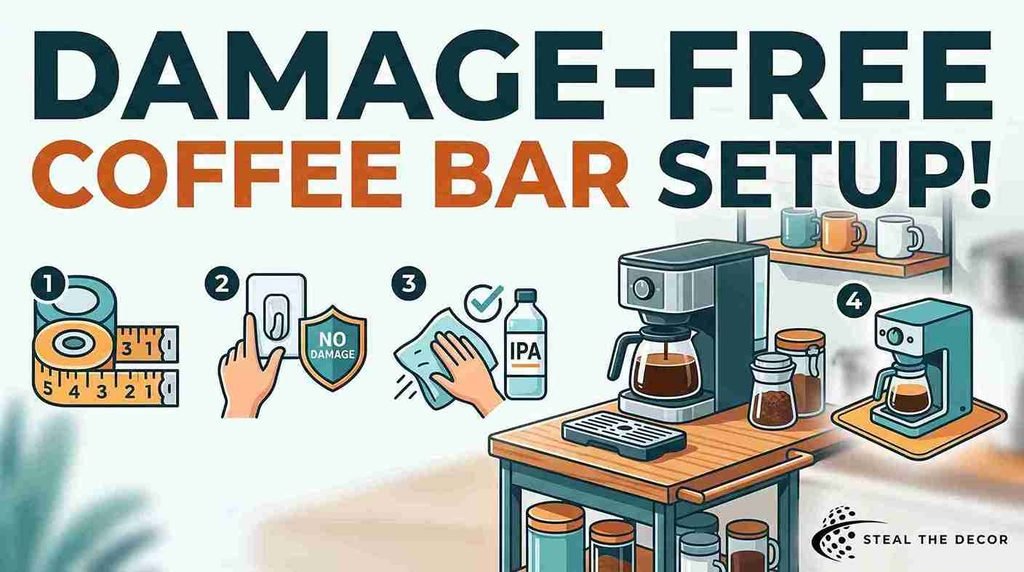
Setting up a renter friendly coffee station takes about 90 minutes and follows six steps. Work in this order because measuring after buying is how you end up with a cart that blocks a cabinet door.
Step 1: Measure the spot before you buy anything. Measure width depth and the height clearance under any cabinet. Write down the distance to the nearest outlet as well. Common mistake: people measure the counter but forget the cabinet above then discover their machine cannot open its lid.
Step 2: Test your wall with one adhesive hook first. Stick a single hook on the exact wall section hang 2 pounds from it and leave it 48 hours. Smooth painted drywall usually passes. Textured or freshly painted walls often fail. Common mistake: mounting the full shelf on day one and losing both the shelf and a patch of paint.
Step 3: Clean the surface with rubbing alcohol. Wipe the wall or cabinet side with isopropyl alcohol and let it dry for 10 minutes. Skip household sprays since the residue they leave blocks adhesion. Common mistake: cleaning with a kitchen degreaser which leaves an oily film that kills the bond.
Step 4: Build the base and place it. Assemble the cart table or shelf and set it in place before loading anything. Check that drawers the fridge door and the dishwasher all still open fully. Common mistake: parking a cart in the fridge door swing and living with it for a month.
Step 5: Load heavy items low and light items high. Put the coffee machine and any glass carafe on the bottom or the counter and keep mugs and canisters up top. Wait one full hour after mounting adhesive shelves before you load them. Common mistake: loading an adhesive shelf immediately before the adhesive has set.
Step 6: Protect the surface underneath. Slide a mat tray or board under the machine and the mugs. Heat marks and water rings are the damage most renters actually get charged for. Common mistake: protecting the walls carefully and forgetting the countertop.
Bottom line: the 48 hour hook test is the single step that saves the most paint.
Common Mistakes Renters Make With a Small Coffee Bar
Most coffee station failures come from weight and heat not from bad products. Here is what trips people up.
Overloading an adhesive shelf. Adhesive strips fail by slow creep so the shelf looks fine for a week and then slides overnight. Load to about half the stated limit and keep glass off the shelf entirely. What to do instead: put mugs on hooks and keep heavy canisters on the counter or cart.
Mounting right next to the stove or kettle spout. Steam and heat soften adhesive and warp wood shelving over a few months. What to do instead: keep the coffee bar at least 4 inches clear of the stove edge and never directly above a kettle.
Choosing a machine that is too big for the surface. A full size espresso machine on a 13 inch cart shelf overhangs on both sides and makes the cart tip prone. What to do instead: match the machine footprint to the shelf first then pick the brand you like within that size.
Skipping the landlord conversation on anything with screws. The fold down shelf idea and any bracket mounted shelf involve holes and an unapproved hole is a deduction. What to do instead: ask in writing before you drill and keep the reply.
Storing coffee beans in clear canisters on a sunny shelf. Light and heat stale coffee beans fast so a pretty display can cost you flavor within two weeks. What to do instead: use opaque canisters or keep the clear ones in the cabinet and display something else.
Ignoring the floor. This one is mine. My first cart sat on old vinyl and the casters left four gray rings I only noticed at move out. What to do instead: put felt pads or a small mat under the cart wheels from day one.
Which of these have you already done in your own kitchen? The overloaded shelf one gets almost everybody at least once.
Renter Safe Coffee Bar Products That Held Up for Me
Six products carried every version of my coffee station and all six came off clean. Prices are what I paid and prices change so treat these as ranges.
The IKEA RASKOG utility cart is the strongest all round pick. It holds about 26 pounds per shelf rolls on four casters and the powder coated steel wipes clean when coffee grounds spill. My only complaint is that the top shelf lip makes sliding a machine on and off slightly awkward.
The Simple Houseware 3 Tier Rolling Cart is the budget coffee station base. It is lighter cheaper and easier to carry up stairs though the shallow shelves suit a pour over kit better than a bulky machine.
Command Picture Hanging Strips by 3M are the adhesive I trust for shelves and racks on smooth painted drywall. They remove by stretching the tab straight down and in my experience that usually leaves the paint intact if you pull slowly and keep the tab parallel to the wall.
The Keurig K Mini is the machine I recommend for the tightest spots since the body is about 5 inches wide. There is no water reservoir to store which is the trade off.
The Bodum Chambord French press needs no power at all which makes it the best fit for a console table or hallway coffee area with no nearby outlet.
OXO Good Grips POP containers keep coffee grounds and pods sealed and stack in a way that suits a narrow top shelf.
| Product / Method | Price Range | Ease of Use (1 5) | Damage Risk | Best For | Our Rating |
|---|---|---|---|---|---|
| IKEA RASKOG utility cart | $40 $50 | 5/5 | None | Floor space beside the fridge | 5/5 |
| Simple Houseware 3 Tier Rolling Cart | $28 $40 | 5/5 | None | Tight budgets and pour over kits | 4/5 |
| Command Picture Hanging Strips by 3M | $10 $18 | 4/5 | Minor residue | Shelves on smooth painted walls | 4/5 |
| Keurig K Mini | $60 $100 | 5/5 | None | Counters under 8 inches free | 4/5 |
| Bodum Chambord French press | $25 $45 | 4/5 | None | Spots with no outlet nearby | 5/5 |
| OXO Good Grips POP containers | $15 $30 | 5/5 | None | Storing coffee grounds and pods | 5/5 |
Table note for the editor: keep this table horizontally scrollable on mobile.
Bottom line: one cart one small machine and one set of sealed canisters covers 90 percent of setups.
What to Check With Your Landlord Before You Start
Ask about these eight points before anything goes on a wall. Most are quick yes or no answers over email and an email reply is the record you want at move out.
- Whether any wall mounted shelving is allowed including adhesive shelving.
- Whether small nail holes or screw holes are permitted with patching on exit.
- Whether appliances may stay plugged in when you are out.
- Whether extension cords or power strips are restricted under the lease.
- Whether the countertop has a finish that reacts to heat or moisture.
- Whether the unit has a limit on total appliance load per circuit.
- Whether adhesive removal damage counts as normal wear or as a deduction.
- Whether the landlord wants photos of the setup before and after.
Tenant rules on damage and deductions vary by state so check your own lease against the tenant rights resources published by the U.S. Department of Housing and Urban Development before you assume anything is fine.
Bottom line: one email now beats one deduction later.
Real Results: What My Coffee Bar Cost Me
My final setup cost $118.47 and took one afternoon. The receipt looked like this: RASKOG cart $44.99 Keurig K Mini $69.99 on sale two OXO POP containers $23.99 adhesive hooks $11.49 silicone mat $7.99 felt caster pads $4.99 minus a $44.97 return I will get to in a second.
The return was the adhesive floating shelf set. I mounted two shelves on textured drywall in my old unit waited the full hour loaded four mugs and nine days later heard the slap at 6 a.m. Two mugs broke and a dime sized patch of paint came away with the strip. That failure is why the wall test is step 2 in this article rather than an afterthought.
What worked was boring and cheap. The cart has moved apartments twice and still rolls. The mug hooks came off the smooth wall in the second place with no mark at all after I warmed them with a hairdryer for 30 seconds and pulled the tabs straight down.
In my experience the cart plus hooks combination is the one most renters should start with. It is under $60 and it undoes in five minutes.
Bottom line: I spent $118 total and the only money I lost was on the one idea that fought the wall.
FAQ: Coffee Station Questions From Renters
How do I make a coffee bar in a small kitchen?
Pick one surface under 30 inches wide add vertical storage above or beside it and choose a coffee maker that fits the depth. A rolling cart beside the fridge or a tiered tray on the counter both work. Measure the outlet distance before buying since cords across a walkway are a hazard.
What do you need for a small coffee bar?
A small coffee bar needs five items: a surface a coffee maker a mug storage spot one or two sealed canisters for coffee beans or pods and a mat or tray under the machine. Spoons sweetener and syrup live in a drawer or a small dish. Nothing else is needed on day one.
Is a coffee station safe for a rental kitchen?
A freestanding coffee station on a cart table or counter is safe for a rental kitchen because nothing touches the walls. Adhesive shelving is also safe on smooth painted drywall when loaded under the stated weight limit. Textured walls carry real paint peel risk and are better left alone.
Does an adhesive coffee shelf leave damage or residue?
Command Picture Hanging Strips by 3M remove cleanly from smooth painted drywall when the tab is stretched straight down and slowly. Residue and paint lift happen mainly on textured walls fresh paint under 30 days old or when the shelf is loaded past the stated weight limit. Test one hook first.
How much does a small coffee bar cost?
A small apartment coffee station costs between $60 and $180 in most cases. A rolling cart runs $28 to $50 a compact coffee maker runs $25 to $100 and storage canisters and hooks add $20 to $40. Repurposing a nightstand or console table you already own drops the total well under $60.
What is the best cart for a coffee station?
The IKEA RASKOG utility cart is the best base for a rolling cart coffee station because it holds about 26 pounds per shelf on a 13 by 20 inch footprint. The Simple Houseware 3 Tier Rolling Cart is the cheaper alternative and suits pour over gear better than bulky machines.
What should I do if my coffee shelf falls?
If an adhesive shelf falls stop reusing that wall section and move the load to a cart or counter. Clean any remaining adhesive with isopropyl alcohol and a soft cloth. For lifted paint photograph it tell your landlord early and ask whether touch up paint from the building is available.
Key Takeaways
- A small space coffee bar fits in under 30 inches of width and needs only a surface vertical storage and one compact coffee maker.
- The IKEA RASKOG utility cart holds about 26 pounds per shelf on a 13 by 20 inch footprint which makes it the most reliable no drill base for an apartment coffee station.
- Command Picture Hanging Strips by 3M carry published weight limits up to 20 pounds per set on the large size and remove cleanly from smooth painted drywall when pulled slowly downward.
- Adhesive shelving usually fails on textured or newly painted rental walls so a 48 hour single hook test with 2 pounds of weight should come before any full install.
- A complete renter coffee station costs between $60 and $180 and repurposing an owned nightstand or console table brings the total under $60.
- The National Coffee Association Fall 2025 National Coffee Data Trends report found that 66 percent of American adults drink coffee daily and 82 percent of past day drinkers had it at home.
- Heat marks and water rings on a rental countertop cause more deposit deductions than wall damage does so a mat or tray under the coffee maker is the cheapest protection available.
Wrapping Up
Coffee corners look like a decorating project and behave like a storage project. Get the base right keep the weight low and the whole thing comes apart in five minutes when the lease ends. My cart and hook setup survived two moves and cost less than a month of takeout lattes and the one time I fought a textured wall I lost.
Have you built a coffee nook in your rental yet and did the wall cooperate? I would love to hear which base you picked.
If the rest of your walls need attention next the peel and stick wallpaper for renters breakdown is the natural next read and the same no drill thinking applies when you hang mirrors without drilling or hang plants without drilling above the coffee area. Every product named here is one I bought myself and used daily. Your deposit is winnable. Build the corner.