
Affiliate disclosure: This post contains affiliate links. If you buy through them, we may earn a small commission at no extra cost to you. As an Amazon Associate, I earn from qualifying purchases.
Most small apartments have an office problem, not a space problem. The dining table becomes the desk, work spreads across the kitchen, and at the end of the day there is nowhere for work to go. Meanwhile a closet sits half-used, holding a rod of clothes you rarely reach for.
A cloffice fixes that split. A cloffice is a closet office: a closet turned into a small, real workspace with a desk, a light, and a door or curtain that closes on the whole thing. This guide covers seven cloffice ideas for renters, a six-step build for a floating closet desk, and the three fixes idea galleries usually skip: light, power, and air. The floating desk version needs screws, so the renter rules at the end matter as much as the ideas.
Quick Answer: A cloffice is a closet converted into a home office, usually by removing the closet rod, fitting a desk at 28 to 30 inches (71 to 76 cm) high, adding shelves above it, and lighting the space so you can work there. Width, depth, and desk height decide whether your closet works. If it is at least 24 inches (61 cm) deep and wide enough for your chair, it can work. If it is shallower, the laptop-only idea below is your best fit.

What Is a Cloffice, Really?
A cloffice is a closet office, plain and simple. You take a closet, you put a desk in it, and you treat it like a room, just a very small one.
What counts as a real cloffice? A desk at a height you can sit at for hours, a chair that fits, light you can read by, and somewhere to put the things you use every day. A laptop balanced on a closet shelf with no chair is not a cloffice. It is a perch, and your back will tell you so within a week.
The real payoff is not the desk. It is the door. When work ends, you close the doors or pull the curtain, and the small home office is gone. That boundary matters in a studio or a one-bedroom apartment, because it tells your brain that the workday is over.
7 Cloffice Ideas at a Glance
| Idea | Best closet | Desk type | Best for |
|---|---|---|---|
| The classic reach-in | Reach-in closet | Floating desk | Everyday remote work |
| Doorless + curtain | Any closet | Floating desk | Open feel, hidden at 5 pm |
| The walk-in half-and-half | Walk-in closet | Floating desk | Keeping clothes too |
| The laptop-only nook | Narrow closet | Narrow-depth shelf desk | Laptop-only work |
| The video-call-ready cloffice | Any closet | Floating desk | Daily video calls |
| The guest-room double duty | Guest-room closet | Floating desk | Guests and work |
| The no-drill starter | Any closet | Freestanding desk | Zero holes |
The 7 Cloffice Ideas
1. The Classic Reach-In Cloffice
This is the cloffice most people picture, and the build section below describes it. Remove the closet rod, fit a plywood desktop or a butcher-block top across the closet at 28 to 30 inches (71 to 76 cm) high, and run floating shelves above it for books and bins. Keep the doors. They are the whole point.
A standard reach-in closet is often about 3 feet (91 cm) wide and 24 inches (61 cm) deep, which is just enough for a laptop, a keyboard, and a notebook side by side. A monitor fits too, but only just, so measure first. If your monitor is wide, a monitor arm lifts it off the desk and gives your keyboard room back.
2. Doorless + Curtain: Open by Day, Gone by Night
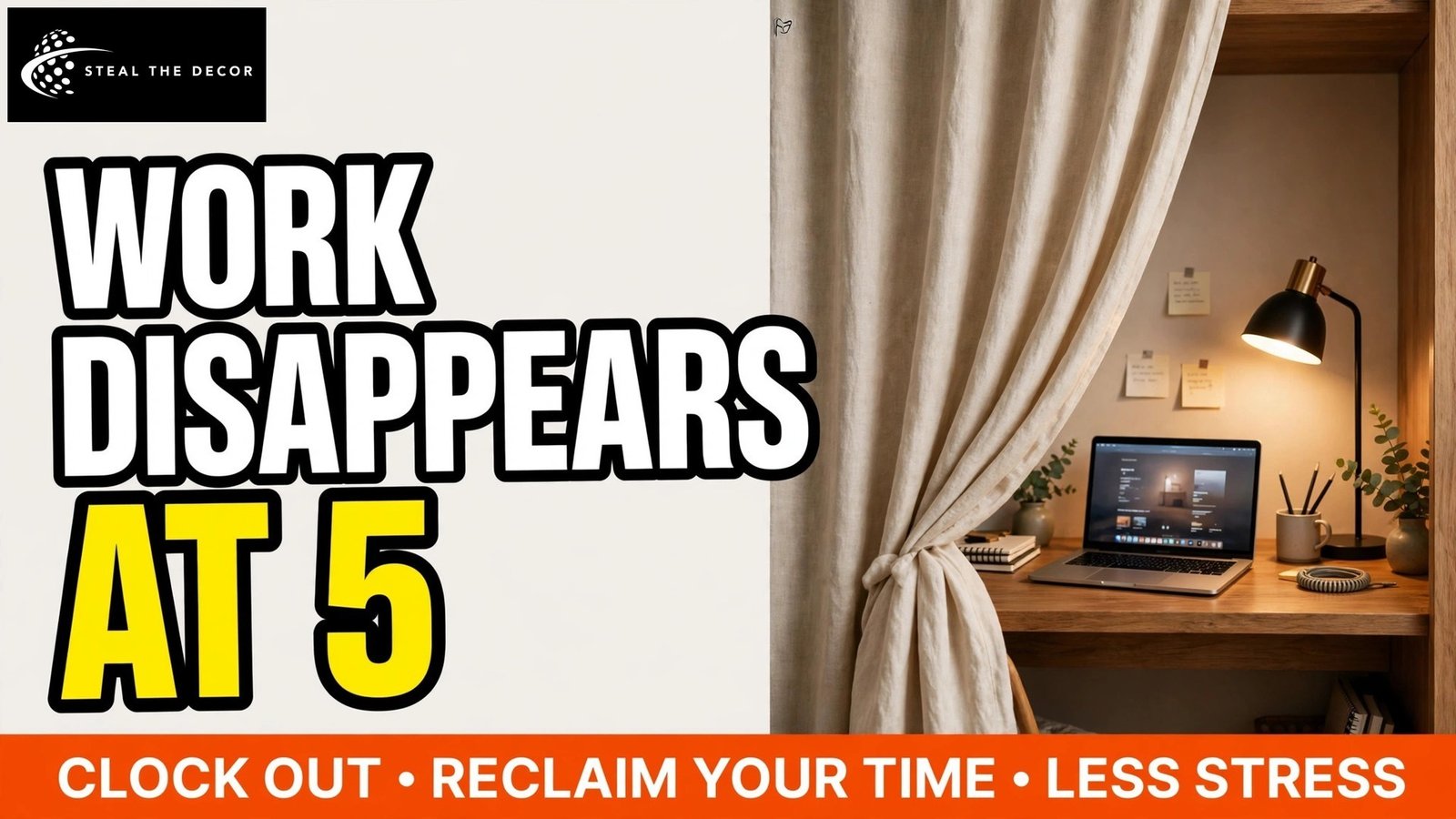
Take the bifold doors off their hinges, store them flat, and hang a curtain from a tension rod across the opening. By day the cloffice feels open and borrows light and air from the room. At night you pull the curtain and work disappears.
A linen curtain in a light colour keeps the space from feeling like a box. The trade-off is sound: a curtain blocks the view, not the noise, so this suits quiet apartments best. Store the doors, do not throw them away. Missing doors are the first thing a landlord notices at move-out.
The same floating desk works here, and the curtain hides the power strip. A quick pass with these cable management ideas for your desk keeps the view tidy.
3. The Walk-In Half-and-Half
If you have a walk-in closet, you do not have to choose between clothes and work. Put the desk on one wall and keep hanging clothes on the other. The trick is clear zoning: a small rug under the desk chair, a different light over the desk, and a shelf line marking where work ends.
This works best in a walk-in at least 6 feet (1.8 m) wide, because you need room to sit and roll back without elbowing a coat. Keep daily clothes on the far side, not above the desk. A rolling cart under the desk holds paper and files.
The drawback is drift: the closet creeps back to full storage unless the desk side stays clear. One basket for stray papers, a pegboard or corkboard for notes, and a label on each bin stop that.
4. The Laptop-Only Nook for Narrow Closets
Some closets are too shallow for a full desk, and that is fine. A narrow-depth shelf desk, about 16 to 18 inches (41 to 46 cm) deep, holds a laptop, a phone, and a notebook, which is all most remote work needs. Add one shelf above for a charger, and a battery-operated sconce on the wall for light.
This is the right idea for a hall closet or a shallow bedroom closet, where narrow depth rules out a full desk. A single floating shelf at desk height is the desk here. Sit on an armless chair that slides fully under the shelf, so you are not perched sideways with one elbow against the wall. Knee clearance matters more here than anywhere else: if your knees hit the wall when you sit, the nook will not get used.
5. The Video-Call-Ready Cloffice
If you are on camera all day, your cloffice background is your office. Paint the back wall a calm colour or hang peel-and-stick wallpaper on the back wall only. One patterned wall reads well on camera.
Light yourself from the front, not from above. A battery-operated sconce at face height or a small task light clipped to a shelf beats a single overhead bulb, which casts shadows downward. Keep the video call background to one plant and one or two books.
Most peel-and-stick wallpaper for renters is removable. Test a corner first to check it peels clean.
6. The Guest-Room Double Duty
A guest-room closet is the easiest cloffice to justify, because the room sits empty most of the week. Build the floating desk, add shelves, and keep a fold-away chair in the closet. When guests come, the chair folds, the desk clears into one bin, and the closet closes.
This works because guests use the room for sleeping, not for storage, so the desk does not fight anyone for space. Leave one shelf free for a guest’s bag, or the desk will become the luggage rack.
Close the curtain or doors, and the room is a bedroom again.
7. The No-Drill Starter Cloffice
Some leases say no holes, and some landlords mean it. This idea uses no screws at all. Slide a slim freestanding desk into the closet. Add battery lights under the existing shelf, an over-door organizer, and a power strip with a flat-plug cord to the nearest outlet.
You keep the rod and the doors, because nothing about the closet changes. When you move, the desk walks out and the closet is exactly as you found it.
What you give up is the floating look and the shelf space a built-in desk frees. A freestanding desk has legs, and legs eat the narrow width a closet gives you. Measure the desk against the opening before you buy. A minimalist desk setup for renters keeps the small surface from turning into a pile.
How to Build a Closet Desk in 6 Steps
- Measure everything, then sit in it. Measure the width, depth, and height, and note trim or outlets. Pull a chair in and sit as if working. Check elbow room, knee clearance, and legroom. A tape measure says a desk fits. Sitting in it says you will use it.
- Clear the closet and patch the walls. Take out the closet rod and any shelves you do not need, and store the rod and brackets. Fill old holes with spackle, sand when dry, and paint the interior a light colour if the lease allows it. Dark walls eat light.
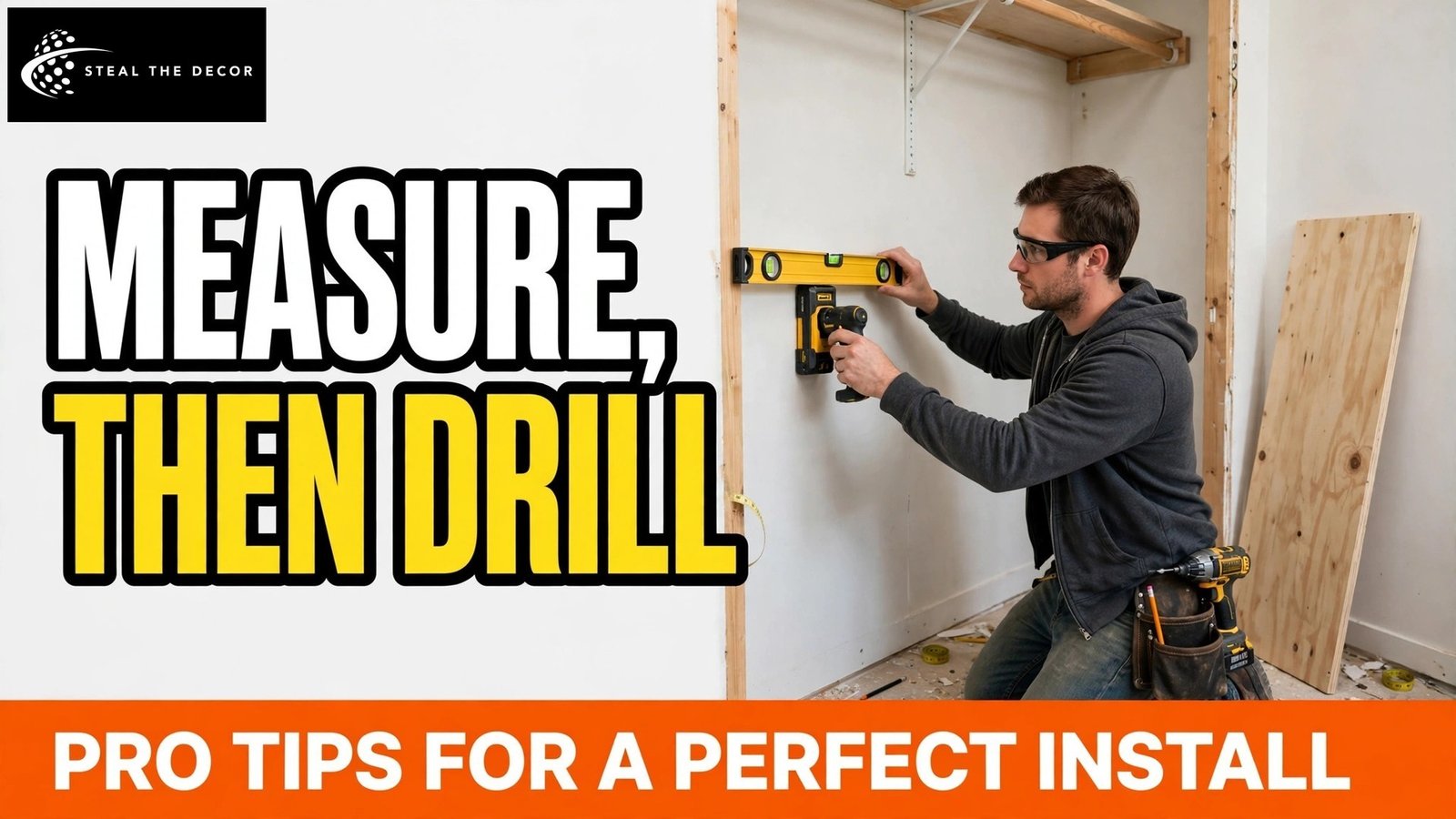
- Find the studs and mark a level line. Use a stud finder on the back and side walls. Studs are usually 16 or 24 inches (41 or 61 cm) apart. Mark 28 to 30 inches (71 to 76 cm) high on all three walls and draw a level line. Check it with a level, not by eye, because a sloping desk rolls your pen off.
- Mount the braces into the studs. Cut 1×2 pine braces about 4 to 6 inches (10 to 15 cm) shorter than each wall, or use L-brackets rated for the load. Pre-drill pilot holes, then screw the braces into the studs, never into drywall alone. Drywall alone will not hold a desk with a monitor on it.
- Set the top and check it twice. Cut a plywood desktop or a butcher block top to fit the closet width, set it on the braces, and screw it down from below. Check it with a level both ways, and make sure nothing flexes before you trust it with anything heavier.
- Add shelves, light, and power last. Mount one or two floating shelves above the desk, high enough to clear your monitor, and add light under the lowest shelf. Run a flat-plug cord to a nearby outlet and a power strip under the desktop. Only then move in the monitor and chair.
Safety: if no stud is where a brace needs to go, use wall anchors rated for the load, and never mount over an outlet or vent you need.
Light, Power, and Air: The Three Fixes Idea Galleries Skip
Light first. You need two kinds: a task light on the desk, and a soft light that fills the closet. An LED strip under the lowest shelf does the second job, and a small desk lamp or a battery sconce does the first. Warm white light, around 2700K, feels like a room. If there is no outlet at all, buy rechargeable battery lights.
Power second. Count everything you will plug in, then add one, because there is always one more charger. A flat-plug cord lets the desk push fully back, and a power strip under the desktop keeps cables off the floor. Wireless keyboards and mice cut two cables out entirely. Keep the strip reachable.
Air third, and this one gets skipped most. A closed closet with a laptop and a person in it warms up fast. Do not seal yourself in with the doors shut for eight hours. Work with the doors open or a curtain instead, or add a small USB fan on a shelf.
The Renter Reality: Screws, Permission, and Patching
Here is the honest part. A floating closet desk is not a damage-free project. It needs screws in studs, holes in walls, and a rod removed. That puts it in a different category from peel-and-stick wallpaper or a freestanding desk.
Ask your landlord before you drill, in writing if you can. Show them the plan: a desk at standard height, screwed into studs, rod stored, doors stored. If the answer is no, use the no-drill starter idea. A cloffice you are allowed to keep beats a floating desk you have to rip out at move-out.
On move-out, patch holes with spackle, sand smooth, and touch up paint if your lease asks for it. Keep the rod, brackets, and doors you removed, labelled, in one place.
5 Mistakes That Ruin a Cloffice
- Buying the desk before measuring. A 24-inch (61 cm) deep desk in a 20-inch (51 cm) deep closet sticks out and blocks the door.
- Planning no light. One overhead bulb is not a workspace. If you cannot read a printed page at the desk, it is a cupboard with a chair in it.
- Choosing a chair that does not fit. Wide armrests and big wheels do not work in a 3-foot-wide (91 cm) closet. An armless chair that slides fully under the desk wins here.
- Letting cables run wild. In a space this small, three loose cables look like ten. Clip them under the desk on day one.
- Sealing the doors shut on airflow. A closed closet office gets warm and stuffy. Work with the doors open, use a curtain, or add a fan.
Frequently Asked Questions
How to build a closet desk?
Measure the closet, remove the rod, find the studs, and mark a level line at 28 to 30 inches (71 to 76 cm) high. Screw braces into the studs, set a plywood desktop or butcher block top on them, and check it with a level. If you cannot drill, use the no-drill starter idea.
How to convert a closet into an office?
Clear the closet, patch any holes, and fit a desk at 28 to 30 inches (71 to 76 cm) high. Add shelves, then solve lighting, power, and airflow before you move in your computer. Finish with a chair that fits and a door or curtain that closes the office away.
What size desk fits in a closet?
A reach-in closet about 3 feet (91 cm) wide and 24 inches (61 cm) deep fits a desk about 36 inches (91 cm) wide and 20 to 24 inches (51 to 61 cm) deep. Shallow closets of 17 to 18 inches (43 to 46 cm) deep fit a narrow laptop desk of 16 to 18 inches (41 to 46 cm) deep instead. Measure the opening too, because a desk that fits inside but not through the door frame cannot get in.
Do you need to remove the closet doors?
No, and keeping them is often best, because closing the doors hides your work. Remove them only if they block your chair or elbows. If you do, store them flat with all hinges and hardware for move-out.
How do you light a closet office with no outlet?
Use battery-powered lights: an LED strip under a shelf, a battery-operated sconce, or a rechargeable desk lamp. Rechargeable lights are the better buy, because daily use eats disposable batteries fast. Pair the task light with a soft under-shelf light.
Can you work in a cloffice all day comfortably?
Yes, if the desk height, chair, and airflow are right. A desk at 28 to 30 inches (71 to 76 cm) high, a chair that fits fully under it, and doors open or a curtain for air make a full workday realistic. What makes it uncomfortable is usually a wrong-height desk, a chair that does not fit, or a sealed closet that gets hot.
How do you keep a cloffice from getting hot and stuffy?
Work with the doors open or replace them with a curtain, so air can move. Add a small USB fan on a shelf aimed at the opening, and do not block any vent with the desk.
Key Takeaways
- A cloffice is a closet turned into a real desk setup, closed away by a door or curtain.
- Measure width, depth, and desk height first, and sit in the closet before building.
- A floating desk at 28 to 30 inches (71 to 76 cm) high, screwed into studs, suits most reach-in closets; a laptop-only shelf suits shallow ones.
- Light, power, and airflow decide whether a cloffice gets used.
- A floating desk needs landlord permission and patching at move-out, while the no-drill starter needs neither.
- Keep the rod, brackets, and doors you remove, labelled and stored, or they will cost you at move-out.
Closing the Closet Door on Work
A good cloffice is not the biggest office, or the prettiest one in a photo. It is the one you actually sit in, with a desk at the right height, light you can read by, and a door you can close when the day is done. Start with the closet you already have, and pick the idea that fits its depth.
If you are still choosing between a built-in desk and a freestanding one, look at small desk setup ideas, and at the best ergonomic office chairs before you buy a chair for a space this narrow. The desk gets the attention, but the chair decides whether you stay.
Which closet in your home is doing the least work right now? That one is probably your office.
1 thought on “Cloffice Ideas: 7 Closet Offices That Actually Work”