
Disclosure: This post contains affiliate links. If you buy through these links, we may earn a small commission at no extra cost to you. As an Amazon Associate, we earn from qualifying purchases.
Most tiny kitchens have a table problem, not a cooking problem. There is nowhere to sit, nowhere to set down two plates, and nowhere to work that is not the stove or the sink. So dinner happens standing up, and the laptop lives on top of the microwave.
A wall mounted drop leaf table fixes exactly that. It is a kitchen table on the wall: lift it up and you have a real dining table, fold flat against the wall when you are done and your apartment kitchen floor is clear again. A corner with no table becomes a real eat-in kitchen.
This guide covers five fold-down options, the install steps, and the renter rules that matter before you drill. This project is different from most renter projects: it needs screws.
Quick Answer: A wall mounted drop leaf table is a table hinged to the wall that folds up for use and folds flat against the wall when you are done. For a small kitchen, pick a space saving table 24 to 40 inches wide, mount it at dining height of 28 to 30 inches, screw it into wall studs, and pair it with folding chairs. The five options below cover ready-made tables, a DIY bracket build, and a bar-height fold-down for standing breakfasts.
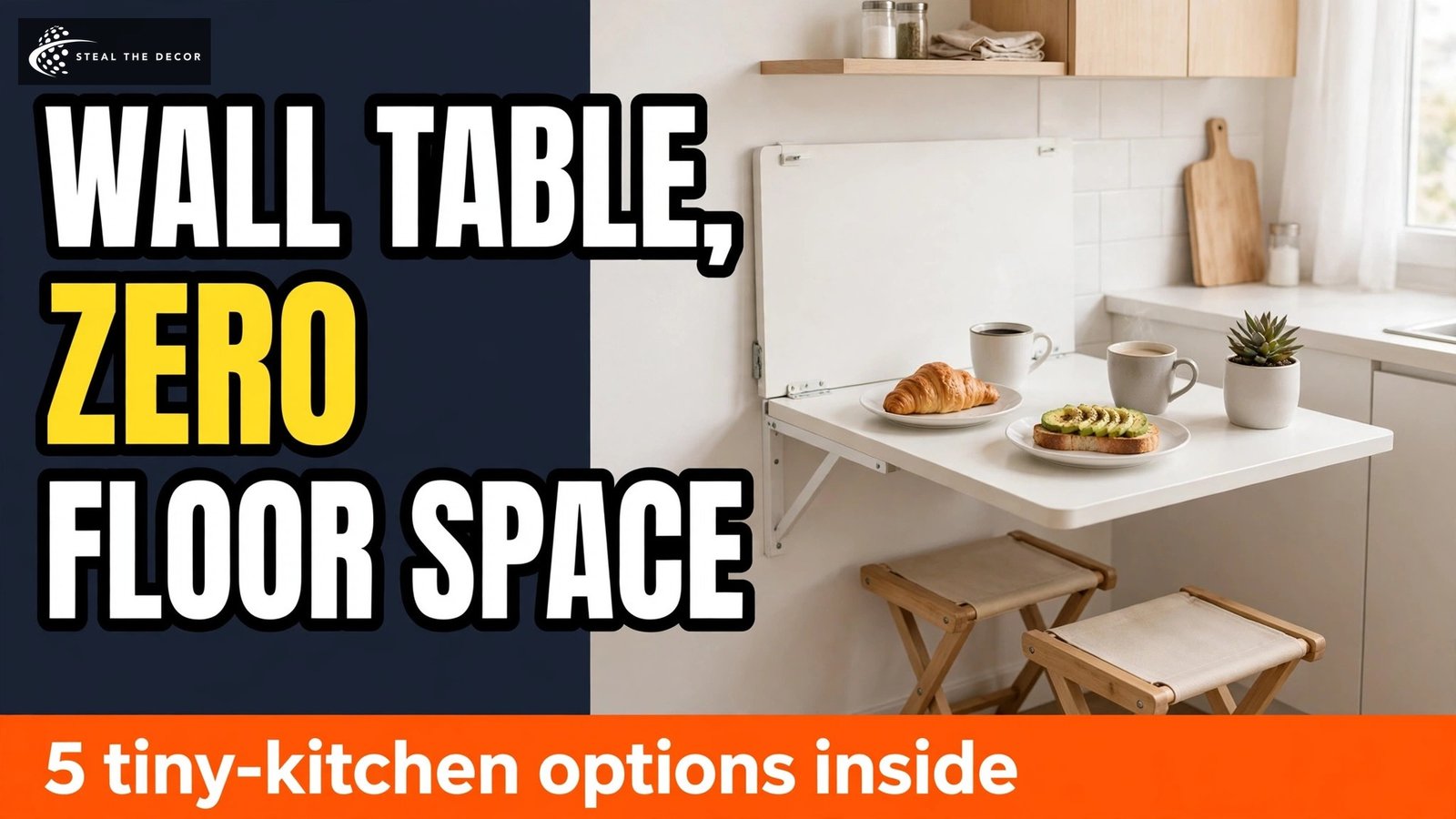
What Is a Wall Mounted Drop Leaf Table?
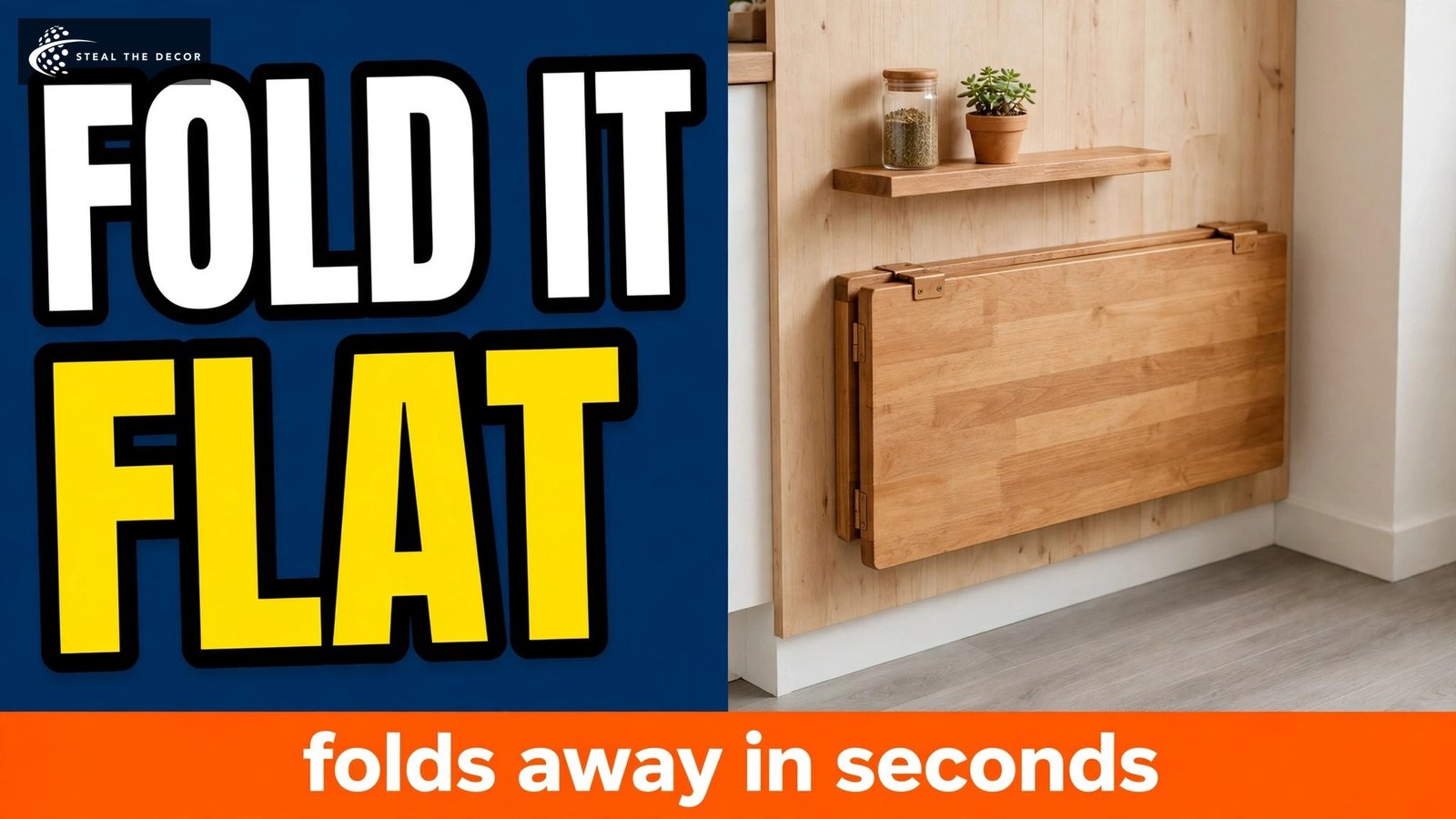
A wall mounted drop leaf table is a tabletop hinged to a wall bracket. When you need it, you lift the top until it is level and lock the folding brackets in place. When you are done, you release the brackets and the top drops flat against the wall, usually sticking out just a few inches, and some models leave a small wall shelf for spices while closed.
Listings mix the terms up. A true drop leaf table has hinged leaves that fold down from a fixed center. A fold-down wall table is the wall-hung version: the whole top pivots on a wall bracket. A gate-leg table is freestanding, with legs that swing out to support leaves, and it still takes floor space even folded. For a small kitchen, the wall-hung fold-down clears the floor.
What this table is not: it is not damage-free, it is not a full desk replacement, and it is not a four-person dinner table unless you buy wide. It is a two-person dining spot and a prep surface that vanishes.
You will also see it sold as a fold-down wall table, a wall mounted dining table, or a floating desk. The names change, but they all work the same way: fold it up to eat, fold it flat to clear the floor.
5 Options at a Glance
| Option | Size | Load rating | Best for |
|---|---|---|---|
| IKEA NORBERG | 29 x 23 in (74 x 58 cm) | Not stated by maker | Ready-made classic |
| DIY bracket + butcher block | 30 x 40 in top (76 x 102 cm) | Depends on brackets | Biggest surface |
| Costway Drop-Leaf Table | 31.5 x 23.5 in (80 x 60 cm) | 66 lbs (30 kg) | Two-way fold |
| Compact white MDF fold-down | 24 x 16 in (60 x 40 cm) | 44 lbs (20 kg) | Tiniest kitchens |
| Mount-It! Heavy-Duty Fold-Down | 45 x 15 in (114 x 38 cm) | 110 lbs (50 kg) | Standing breakfasts |
If I were picking for a typical one-bedroom rental kitchen, I would start with the Costway for everyday dining, and switch to the Mount-It! only if the walkway is too narrow for chairs. The other three suit more specific situations, and each one has a catch worth knowing before you drill.
The 5 Options
1. IKEA NORBERG: The Ready-Made Classic
The NORBERG is the table most people picture when they hear “wall mounted drop leaf table,” and it earned that spot. It is a white melamine wall mounted kitchen table with steel hardware that folds flat against the wall, leaving a small shelf for bits and pieces when closed. At 29 by 23 inches (74 by 58 cm), it holds two dinner plates and a couple of mugs without a fight.
The honest drawback is size. Twenty-three inches of depth is enough for dinner for two, but a laptop plus a coffee mug plus a plate turns into a juggling act. The melamine top wipes clean, but the particleboard core will not forgive a long soak. Its older IKEA siblings, the solid birch NORBO and the ash veneer BJURSTA, show up secondhand and follow the same idea. Amazon listings for it come from third-party resellers, so compare them with IKEA’s own price before you buy. Load rating is not stated by maker, so treat it as a light-duty table: meals and laptops, not a stand mixer.
2. DIY Bracket + Butcher Block: The Biggest Surface
If you want the most table for the least money, build it. The classic DIY version uses a pair of 16-inch folding brackets, 3-inch screws driven into wall studs, and a 30-by-40-inch (76 by 102 cm) tabletop. That size seats four, and butcher block gives you a prep surface you can sand and re-oil for years.
The drawback is that you are the manufacturer. You pick the brackets, so the weight capacity is whatever they are rated for: check it before you buy. You also finish the top yourself, and raw butcher block near a sink needs sealing or it stains. This is the best option for a confident DIYer and the worst for someone who wants a box to open.
3. Costway Drop-Leaf Table: The Two-Way Fold
The Costway Wall-Mounted Drop-Leaf Table is the easiest box-to-wall option here. The top measures 31.5 by 23.5 inches (80 by 60 cm), folds in two stages, and is rated to 66 lbs (30 kg). Drop one leaf and you get a narrow ledge for a laptop or a coffee; lift both and two people can eat. Folded flat, it sits about 3 inches (8 cm) off the wall. Recent listings have it around $50 to $55, but prices move, so check before you buy.
The top is MDF with pine trim, so it does not like standing water: wipe spills fast and keep it out of the sink splash zone. The 66 lbs rating is fine for meals and a laptop, not for a stand mixer or someone leaning their weight on it. For a dining table, swap the included screws for lag bolts into studs. And measure your gap first: 31.5 inches fits most galley kitchen walls but not every space between cabinets.
4. Compact White MDF Fold-Down: For the Tiniest Kitchens
Some kitchens have one stretch of free wall and nothing more. A compact white fold-down table measures 60 by 40 centimeters (about 24 by 16 inches), is 14 millimeters thick, weighs about 4 kg (9 lbs), and mounts at any height you choose. It fits a coffee, a laptop, or one dinner plate with room to spare.
The 20 kg (44 lbs) load rating is the catch. Two laptops, a stack of books, and dinner will push past it, so this is a one-person table, not a family one. MDF also swells if it stays wet, so keep it away from the sink splash zone and wipe spills fast. Buy it for a single-person breakfast nook, not for hosting. Tables in this size come from many small sellers under different names, so read the load rating on the exact listing you choose.
5. Mount-It! Heavy-Duty Fold-Down: The Standing Breakfast Bar
Not every kitchen meal needs a chair. The Mount-It! Heavy-Duty Wall Mounted Drop Leaf Table (model MI-7993) is 45 inches (114 cm) wide and only 15 inches (38 cm) deep, with a 30-inch version for shorter walls. That shallow depth is exactly what a standing bar needs. Mount it 40 to 42 inches (102 to 107 cm) from the floor and a blank wall becomes a breakfast bar or coffee spot. Steel brackets carry a particle board top rated to 110 lbs (50 kg), the highest rating in this list.
The drawback is obvious: you stand. It is great for coffee and quick meals and poor for long dinners or anyone with sore knees. You also need stools, and stools need a storage plan of their own. The particle board top needs a quick wipe after spills, especially near the sink. Skip this one if your household wants sit-down dinners every night.
How to Install a Wall Mounted Drop Leaf Table in 6 Steps
Install day is short if the measuring is done right.
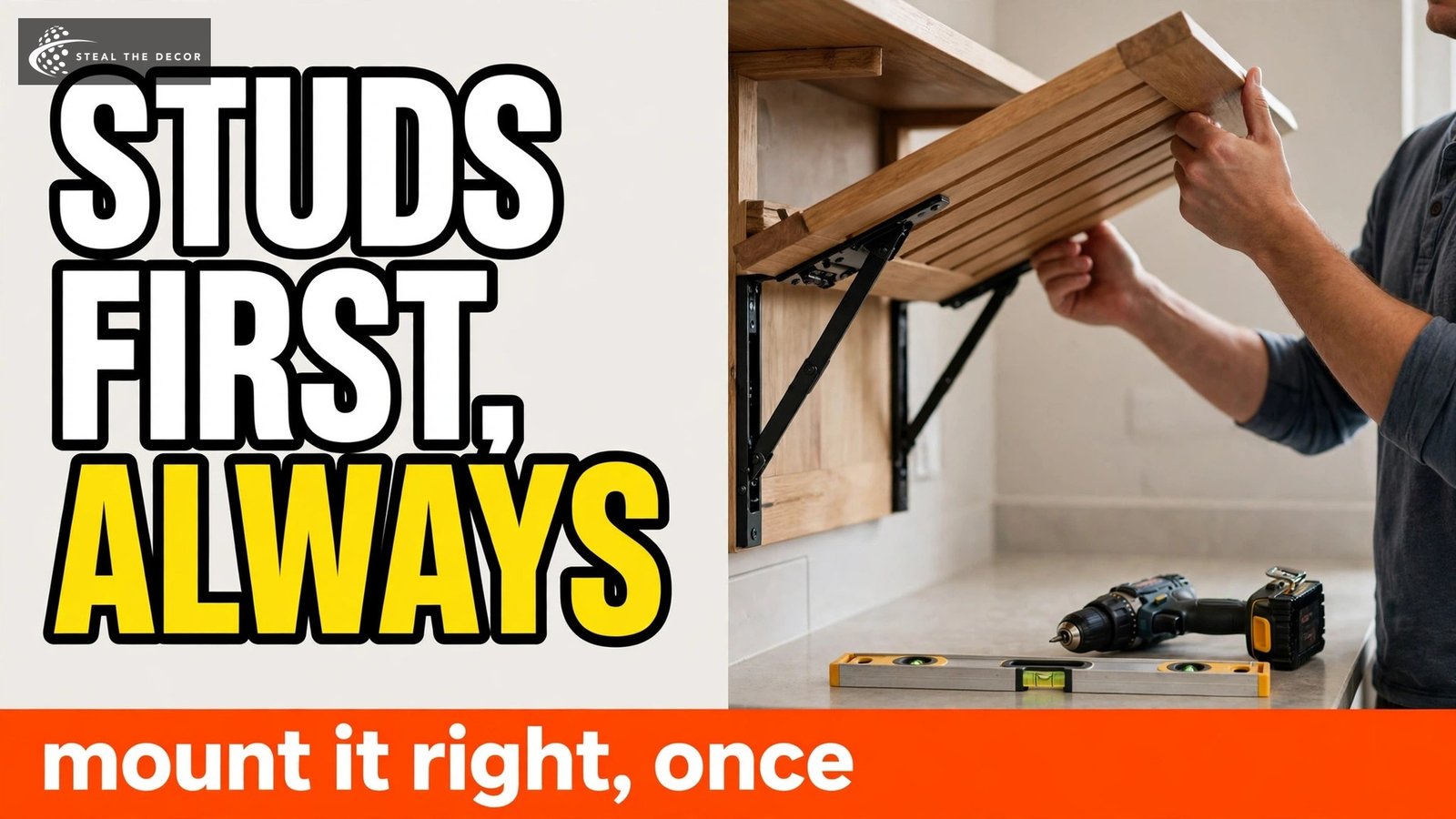
- Find the studs. Run a stud finder along the wall and mark two studs where the table will go. Studs usually sit 16 inches (41 cm) apart, so plan bracket spacing around them. A table mounted only to drywall will fail.
- Pick your height and mark a level line. For dining or desk use, mark the line at 28 to 30 inches (71 to 76 cm), the standard dining height. For a bar-height table, mark it at 40 to 42 inches (102 to 107 cm). Counter height, around 36 inches (91 cm), suits a table you will also use as extra counter space. Use a level, not your eye: a table that slopes will slide everything toward one end.
- Pre-drill pilot holes. Drill pilot holes at the marked stud points. Pilot holes keep wood from splitting and help screws drive straight so brackets sit flush.
- Mount the brackets into the studs. Drive lag bolts or long screws through the bracket arms into the studs. For a loaded dining table, lag bolts into studs are the right call. A fold down bracket kit usually ships with its own wall anchors; use them only if rated for the load. Heavy-duty toggle bolts are a fallback only when no stud lines up, and only when rated for at least twice the expected load.
- Attach the tabletop. With the brackets locked open, center the top on the bracket arms and screw up from below, using screws long enough to bite without poking through the top surface. Check the top sits parallel to the floor when extended.
- Test the fold and the load. Fold the table up and down several times; it should move without sticking and lock firmly open. Then load it gradually with plates and mugs. If anything flexes or creaks, stop and re-check the brackets.
Two safety notes for every install. Leave at least 5 centimeters (2 inches) of clearance on each side so fingers do not pinch. Never mount over a floor register or an electrical outlet.
Measure First: Size, Chairs, and the Walkway
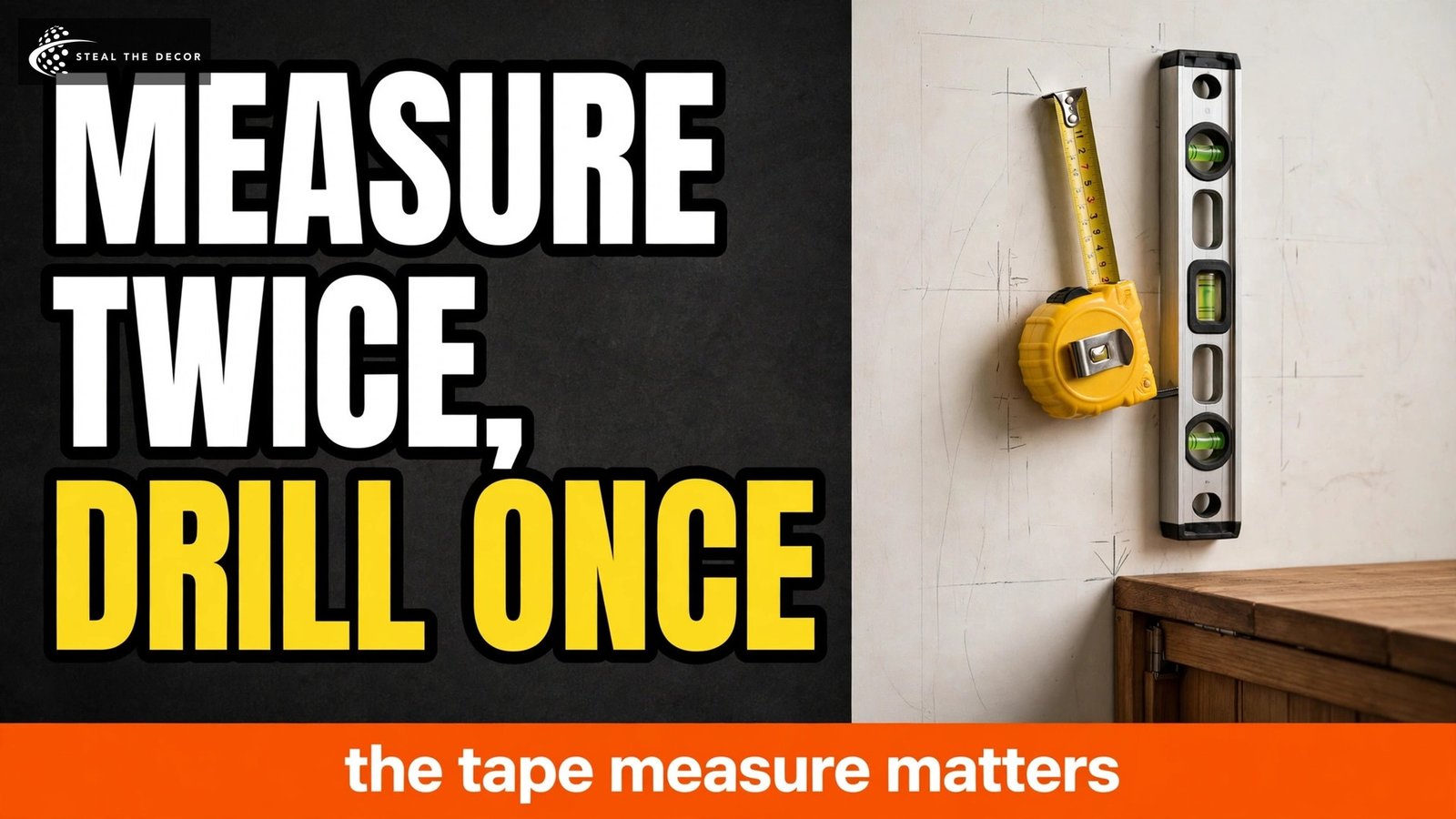
Measure three things before you buy: the wall width, the folded projection, and the walkway you will keep. The folded projection is the number people forget. Here is how the math works: in a 90-centimeter (35-inch) gap, a table that sticks out 20 centimeters (8 inches) when folded leaves a 70-centimeter (28-inch) walkway. If yours sticks out 30 centimeters (12 inches), that gap shrinks to 60 (24 inches), and the kitchen feels like a corridor.
Then solve the chair problem before the table arrives. A wall mounted table without a chair plan is a shelf. Folding chairs that hang on wall hooks, stackable stools that tuck under the table, or a single slim stool are the usual answers. If your chairs do not fold or stack, you have traded a table footprint for a chair graveyard, and the room is no better off. Pair the table with chairs from day one, and measure chair pull-out space too.
For dining, 19 to 24 inches (48 to 61 cm) of depth fits two place settings. For a bar-height setup, 14 to 16 inches (36 to 41 cm) holds a plate and a mug. Anything deeper than your walkway allows will dominate the room even folded.
The Renter Reality: Screws, Permission, and Patching
Here is the honest part. A wall mounted drop leaf table is not a damage-free project. It screws into your wall, and in most rentals that means it screws into studs with real holes. If your lease bans drilling, this project waits until you have written permission from your landlord. A quick message with the plan and a promise to patch on move-out gets a yes more often than you would expect.
When you do move out, patching is a small job. Remove the brackets, patch holes with spackle, sand smooth when dry, and touch up with matching paint. Photograph the wall before install and after patching, so you have proof of the condition either way. The holes are small and few, usually four to eight, far less wall damage than a gallery wall.
If your landlord says no, do not force it. A freestanding gate-leg table gives you a similar fold-away surface with zero holes, and everything else in the kitchen can still go screw-free with command hooks for kitchen organization. The wall table is worth asking about, but it is not worth a deposit fight.
5 Mistakes That Ruin a Fold-Down Table
- Mounting to drywall alone. Toggle bolts sound strong until a loaded table levers them out. Studs first, always.
- Mounting at the wrong height. A dining table at bar height or a bar table at dining height will annoy you every single day. Sit in your chair, measure, then drill.
- Buying too deep for the walkway. A 24-inch-deep table in a narrow galley kitchen blocks the path even folded. Measure the folded projection, not just the open size.
- Forgetting the chairs. The table is half the setup. No chair plan means no dinners at the table.
- Overloading past the rating. A 20 kg (44 lbs) table does not become a 40 kg (88 lbs) table because you need it to. Respect the load rating or buy a stronger bracket set.
Wall Mounted Drop Leaf Table FAQs
How much weight can a wall mounted drop leaf table hold?
It depends on the model and the mounting. Compact MDF tables usually state about 20 kg (44 lbs), the Costway drop-leaf table is rated to 66 lbs (30 kg), and the Mount-It! heavy-duty table to 110 lbs (50 kg). Bracket rating and stud mounting matter more than the tabletop.
Do you need wall studs to mount a folding wall table?
Yes, for any table that will hold real weight. Screw brackets into studs with lag bolts or long screws. Heavy-duty toggle bolts are a fallback only when no stud lines up, and only when rated for at least twice the expected load. Drywall alone is not a plan.
What height should a wall mounted drop leaf table be?
For dining, mount it at 28 to 30 inches (71 to 76 cm), the standard dining height that pairs with normal chair seat heights near 17 to 18 inches (43 to 46 cm). For a standing breakfast bar, mount it at 40 to 42 inches (102 to 107 cm) and pair it with stools. Measure from the floor while sitting in your own chair before you mark the wall.
Can renters install a wall mounted table?
Yes, with landlord permission. This project needs screws into studs, so it is not damage-free and most leases require approval for drilling. Ask in writing, promise to patch holes on move-out, and keep before-and-after photos. If permission is refused, a freestanding gate-leg table is the no-holes alternative.
What size drop leaf table fits a small kitchen?
For most small kitchens, a table 24 to 40 inches wide and 19 to 24 inches deep works for two. In a very tight kitchen, a 60-by-40-centimeter (24-by-16-inch) compact table fits one person. Measure wall width, folded projection, and walkway before choosing.
How does a wall mounted drop leaf table fold?
The tabletop pivots on hinges attached to wall brackets. Lift the top until it is level and the folding brackets lock in the open position. To close it, release the bracket locks, usually with a small lever or pull, and lower the top until it lies flat against the wall. Some models fold down into a small wall shelf.
What is the difference between a drop leaf table and a fold-down wall table?
A drop leaf table has hinged leaves that fold down from the sides of a fixed center section, and it usually stands on legs. A fold-down wall table hangs entirely from wall brackets and has no legs, so the floor underneath stays completely clear. For a tiny kitchen, the wall-hung version saves the most space.
Key Takeaways
- A wall mounted drop leaf table turns a blank wall into a dining spot, then folds flat out of the way.
- Mount into studs at 28 to 30 inches (71 to 76 cm) for dining or 40 to 42 inches (102 to 107 cm) for a standing bar.
- Five options cover most kitchens: the IKEA NORBERG, a DIY bracket build, the Costway drop-leaf table, a compact MDF table, and the Mount-It! heavy-duty fold-down.
- Check the load rating before you buy. A 44 lbs (20 kg) table, a 66 lbs (30 kg) table, and a 110 lbs (50 kg) table are very different tables.
- Solve the chair problem on day one, or the table becomes a shelf.
- Renters should get landlord permission in writing, then patch with spackle on move-out.

Your Tiny Kitchen Can Have a Table After All
A wall mounted drop leaf table removes furniture instead of adding it. Pick the option that fits your wall, mount it into studs at the right height, and keep the chairs foldable. The kitchen stays open, the table appears when you need it, and the walkway stays clear the rest of the day.
Once the table is up, the rest of the kitchen can follow the same small-space logic. Start with over-the-sink storage ideas for the counter, add a small-space coffee bar ideas corner if you have a spare stretch of wall, and plan the whole room around a rental kitchen makeover on a budget. For a full system, learn how to organize a small kitchen without a pantry so every inch earns its place.