
Table of Contents
Three rugs sat rolled up against my bedroom wall for two weeks. That’s how long it took to find the one that actually fit. Not “fit” as in the color worked fit as in the dimensions made the room look like an adult lived there instead of someone mid-move. I’m renting a 420-square-foot one-bedroom, and figuring out how to choose the right rug size for a queen bed turned out to be way less obvious than every “just buy an 8×10” comment on Reddit made it sound.
I measured my bed frame, my floor space, my door swing, and honestly, my patience across four separate layouts before landing on the one that finally worked. Below is exactly what I found, including the two sizes that looked wrong in my room but might be perfect in yours.
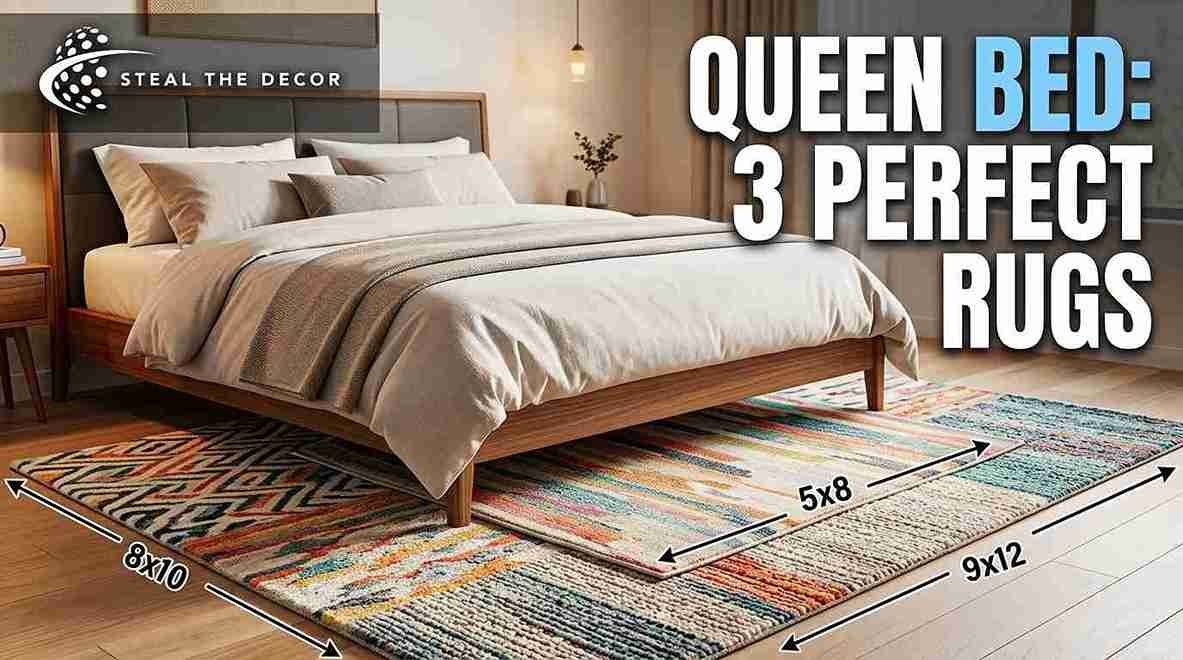
The Short Version: A standard queen mattress measures 60 x 80 inches, but your bed frame is usually 4 to 10 inches wider and longer so measure the frame, not the mattress. For most bedrooms, an 8×10 rug is the best rug size for a queen bed because it lets the rug extend 18 to 30 inches beyond the bed on the sides and foot. Go 9×12 in a master suite where you want nightstands fully on the rug, and drop to 5×8 or a pair of runners in small apartments where an 8×10 physically won’t clear the door.
Standard Queen Mattress Dimensions vs. Rug Placement
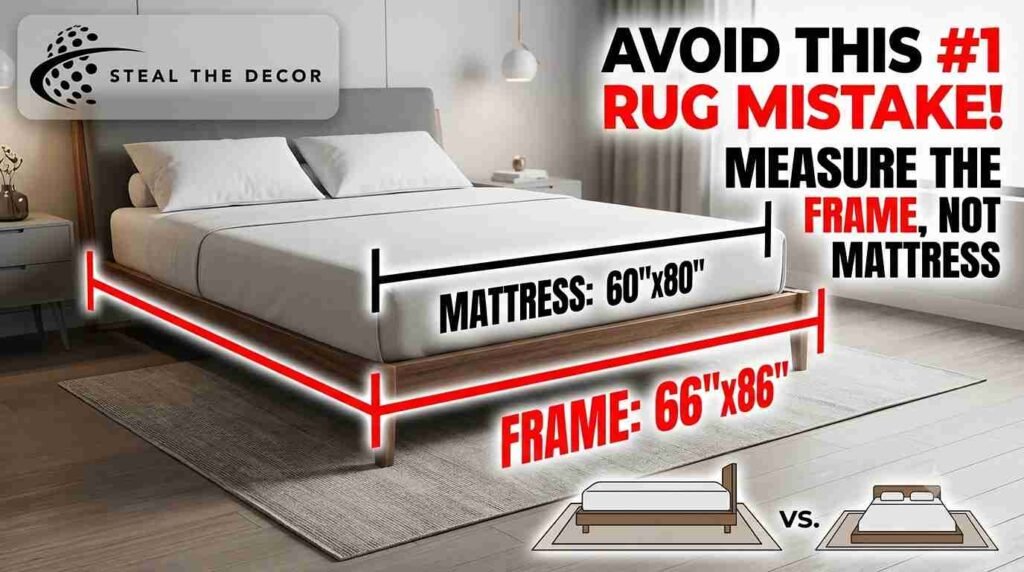
A standard queen mattress measures exactly 60 inches wide by 80 inches long. That part’s consistent everywhere Casper’s mattress size comparison guide confirms it’s the most common size sold in the U.S. But here’s the mistake I made on my first attempt: I measured the mattress, not the bed.
Big difference. My platform bed frame adds roughly 4 inches on each side and another 4 inches at the foot. So my “perfectly sized” 8×10 rug actually looked cramped once the frame not just the mattress was sitting on top of it.
If you’ve got an upholstered frame, a storage bed, or anything with a thick headboard, assume your real footprint is closer to 66 x 86 inches before you even start measuring rug clearance. This one mix-up is the most common reason a “correctly sized” rug still looks slightly off once the bed’s back in place.
Bottom line: measure your bed frame’s outer edges, not the mattress tag, before you buy anything.
Best Standard Rug Sizes for a Queen Bed (5×8, 8×10, 9×12)
An 8×10 rug is the best rug size for a queen bed in most rental bedrooms. It works if your room is roughly 10×10 feet or larger, and it gives you enough spare floor to walk around three sides of the bed without the rug touching the walls.
A 9×12 rug works if you’ve got a genuinely spacious primary bedroom think 12×14 feet or bigger and you want both nightstands and an end-of-bed bench sitting fully on the rug. It doesn’t work in a standard apartment bedroom. I tried it in mine, and the rug edges ran under my closet doors, which turned into its own damage deposit headache.
A 5×8 rug or a pair of runners works if your room is under 10×10 feet, you’re layering over wall-to-wall carpet, or you just don’t want to commit $200+ to a rug the size of a twin mattress. It doesn’t work if you’re going for that fully furnished, expensive-looking anchor effect a 5×8 under a queen bed reads more like an accent than a foundation.
Bottom line: pick your size based on your actual floor plan, not what looks best in a showroom photo.
Dimensions Breakdown Cheat Sheet
I taped this exact chart to my closet door while I was rug shopping so I’d stop second-guessing myself in the aisles.
| Rug Size | Best For | Nightstand Placement | Border Space Beyond Bed |
| 5′ x 8′ | Small Bedrooms / Tight Budget | Off the rug | ~12–18 inches |
| 8′ x 10′ | Standard Bedroom (Best Choice) | Half On or Off | ~30 inches (Ideal) |
| 9′ x 12′ | Master Suites / Spacious Rooms | Fully on the rug | ~42 inches |
| Twin Runners (2’x6′) | Narrow Rooms / Hardwood Flooring | Off (Sides of bed) | Custom placement |
If you’re also dealing with wall-to-wall carpet under that rug, this chart pairs directly with my full breakdown on placing an area rug over carpet carpet changes how much of that border space actually reads as “floor.” And if you’ve ever had a rug slide or ripple after a few weeks on carpet, my post on how to keep a rug from bunching on carpet walks through the exact grippers that stopped it from happening in my own bedroom worth reading before you commit to any of the sizes above.
Pro Tips for Renters:
- Buy your rug pad the same day as the rug. Most people forget it, then wait three weeks for a second shipment while the rug slides around on hardwood.
- If you’re stuck between two sizes, size up. An 8×10 that’s slightly too big reads intentional. An 8×10 that’s slightly too small reads like a mistake.
- Dry-lay a bedsheet cut to your target rug dimensions on the floor before you buy cheapest way to “see” the size without dealing with a return.
- Rugs shrink visually once furniture sits on them. What looks huge in an empty room looks correct once the bed, nightstands, and a lamp are back in place.
- If your lease requires you to keep original flooring photos on file, photograph the bare floor before the rug goes down. It protects you the same way documenting a rental without damage protects your deposit everywhere else in the apartment.
Step-by-Step: How to Position Your Rug Under a Queen Bed
A step-by-step method for how to choose the right rug size for a queen bed, covering measuring the bed frame, picking a layout, and positioning an 8×10, 9×12, or 5×8 rug without damaging rental flooring.
How to Choose the Right Rug Size for a Queen Bed
A step-by-step method for how to choose the right rug size for a queen bed, covering measuring the bed frame, picking a layout, and positioning an 8×10, 9×12, or 5×8 rug without damaging rental flooring.
Supply:
- Tape measure
- Painter's tape
- Rug (5×8, 8×10, or 9×12 depending on room)
- Rug pad (felt or felt-rubber, hardwood-safe)
Step 1: Measure your bed frame’s outer edges, not the mattress. Use a tape measure from the outermost point of the frame on each side, including any footboard. Write these numbers down they’re what you’ll compare against rug dimensions, not the 60×80 mattress number.
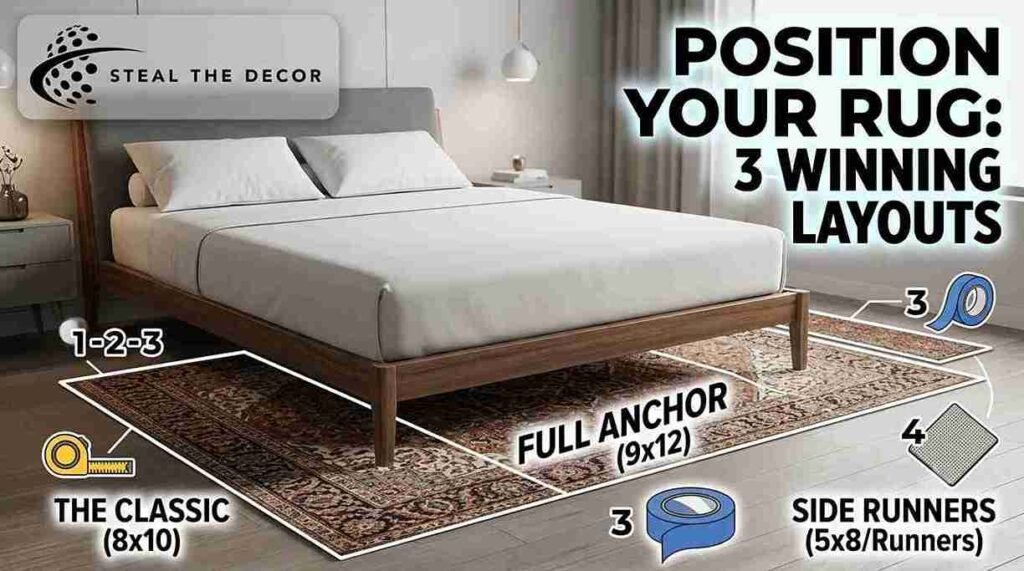
Step 2: Choose your layout style. There are three that consistently work in rental bedrooms:
- The Classic 8×10 Place the rug perpendicular to the bed. Pull the top edge down so it sits just in front of your nightstands, with either the nightstand front legs off the rug or the nightstands entirely off it. Gives you a comfortable 30-inch landing zone on both sides and at the foot of the bed.
- The Full Anchor (9×12) Slide the rug all the way to the headboard wall. Both the bed and both nightstands sit fully on top of the rug, with room left at the foot for an end-of-bed storage bench.
- The Budget/Small Room Layout (5×8 or runners) Place a 5×8 rug crosswise under the lower two-thirds of the mattress, or use two 2.5×8 runners flanking either side of the bed for a soft landing without covering the whole floor.
Step 3: Dry-fit before you unroll a real rug. Use painter’s tape on the floor to outline your chosen rug’s exact dimensions. Walk around it for a day. Live with it a little. This is the one step that would’ve saved me from buying and returning the wrong size the first time.
Step 4: Add a rug pad before you place furniture. A felt or felt-rubber pad keeps the rug from creeping and adds the underfoot cushion that makes an 8×10 feel worth the price. If you’re on hardwood, stick to pads specifically marked safe for finished floors RugPadUSA’s hardwood-safe line is the one I used, and it’s the type most flooring manufacturers actually recommend.
Step 5: Reposition furniture last. Move the bed frame onto the rug first, then the nightstands, then any bench or chair. Adjusting furniture after the rug is down instead of guessing beforehand is what makes the 18-inch rule visually obvious once it’s finished.
The Rule of 18 Inches
Designers use one consistent standard here: your rug should extend at minimum 18 to 24 inches beyond each side of the bed. Go shorter, and the rug reads like a bath mat that wandered off. Go past 30 inches on each side, and you’re solidly in 9×12 territory. Honestly, this is the one number I’d want a first-time renter to remember over everything else in this guide.
Bottom line: if you only measure one thing before buying, measure whether you have 18 clear inches on both sides of the bed frame.
Should Nightstands Sit On or Off the Bedroom Rug?
Depends entirely on your rug size. With an 8×10, I keep my nightstands half on: the back two legs rest on the rug, and the front two sit on the bare floor. Looks intentional. Avoids the “floating rug” problem where furniture legs teeter right at the rug’s edge. With a 9×12, nightstands should sit fully on the rug anything else looks like the rug was an afterthought in a room that clearly has the space for more.
With a 5×8 or runners, keep nightstands entirely off the floor. There simply isn’t enough rug real estate to support them without the layout looking pinched.
Bottom line: match nightstand placement to rug size, not personal preference the two aren’t independent choices.
Small Bedroom & Apartment Fixes: 5×8 Rugs and Runners
Most rug-sizing advice assumes you’re working with a 10×12 room. And if you’ve ever stood in a real one-bedroom in a city like New York or San Francisco, you know that assumption falls apart fast. When my bedroom door swung inward and clipped the corner of an 8×10 test-lay, I switched to two 2.5×8 runners flanking the bed instead same finished-floor feeling, zero door clearance issues. This is the fix most big decor sites skip entirely. It’s also the one that actually solved my space problem.
And if you’re in a rental with a genuinely tight footprint I feel you. This one’s for you.
If you’re combining this with other small-space flooring work, my guide to temporary flooring for rentals covers layering rugs and interlocking tiles in rooms too small for a full 8×10 layout.
Bottom line: in a genuinely small bedroom, two runners will outperform one undersized rug every time.
Clearance Rules Competitors Miss: Doors, Vents, and Walkways
Almost every rug-size guide talks about the bed and completely ignores three things that actually derail a layout in a rental. Here’s what most people miss:
- Door swing clearance. Measure how far your bedroom door swings inward before you commit to rug placement an 8×10 that clips the door will bunch, curl, and eventually damage both the rug edge and the door itself.
- Floor vent or register clearance. Never place a rug edge directly over a floor vent. It blocks airflow and, over a full season, can trap moisture underneath.
- Closet door swing. Bifold and sliding closet doors both need a few inches of unobstructed floor check this before the rug is unrolled, not after.
Bottom line: walk your actual doors and vents with a tape measure before you finalize rug size this is the step every big rug retailer’s guide skips.
Renter-Safe Rug Products & Materials We Actually Recommend
I tested four combinations of rug and rug pad in my own bedroom over about three weekends. Not gonna lie I was skeptical about the washable rug at first. Here’s what actually held up.
| Product / Method | Price Range | Ease of Use (1–5) | Damage Risk | Best For | Our Rating |
| Ruggable Washable Area Rug (8×10) | $200–$280 | 5/5 | None | Renters with pets or messy roommates | 5/5 |
| RugPadUSA Basics Felt Pad | $30–$60 | 5/5 | None | Hardwood and LVP flooring | 5/5 |
| Low-Pile Wool Blend Area Rug (5×8) | $90–$150 | 4/5 | Minor shedding | Small bedrooms, budget layouts | 4/5 |
| Jute Fiber Runner Pair (2.5×8 each) | $60–$110 for the pair | 3/5 | Rougher underfoot | Narrow rooms, hardwood floors | 4/5 |
Every product here is a damage-free, deposit-safe choice none require adhesive, tacking, or anything that touches your actual flooring.
If you’re buying secondhand or inherited a rug that already has a season of wear on it, don’t skip maintenance just because it’s not new my guide on how to clean a vintage rug covers the gentler methods that won’t strip color or fray the edges, which matters even more once it’s anchoring a whole bedroom layout.
Bottom line: pair a washable rug with a felt pad if you have pets, kids, or a roommate who spills coffee near the bed.
What to Check With Your Landlord Before You Start
None of this requires permission in most leases. But a quick check protects you anyway:
- Confirm your lease doesn’t restrict rug pads with adhesive backing on hardwood floors
- Ask whether your unit’s floors are original hardwood or engineered this changes which rug pad type is safe
- Photograph the bare floor before placing anything, the same way you’d document any rental without damage
- Check if your lease mentions floor vent or register access requirements
- If you’re on carpet, confirm whether rug grippers are allowed underneath
For a broader read on what actually counts as damage versus normal wear on flooring, Justia’s tenant security deposit guide breaks down what most leases consider acceptable wear versus chargeable damage.
Bottom line: a rug and rug pad, chosen correctly, is one of the lowest-risk purchases you can make in a rental bedroom.

Real Layout: What I Got for $267
Here’s the actual math from my apartment. I bought an 8×10 Ruggable ($249) and a RugPadUSA felt pad cut to size ($42, on sale) and returned a 9×12 I’d initially ordered because it didn’t clear my closet doors. Total spend after the return credit landed at $267.
I remember standing in the middle of that empty room, staring at the 9×12 taped out on the floor, thinking there was no way it would fit. It didn’t. Boxed it back up the next morning.
What worked: the classic 8×10 layout with nightstands half on. What I didn’t do: My first instinct was to go bigger “to be safe,” which cost me a restocking wait and taught me that bigger isn’t automatically better in a real bedroom.
Bottom line: measure the room before you shop, not after the rug arrives.
Common Mistakes Renters Make With Bedroom Rug Sizing
Measuring the mattress instead of the bed frame. This is the one I made myself. The mattress tag says 60×80, but your actual furniture footprint is bigger once the frame and headboard get factored in. Measure the outer edges of the frame not the mattress dimensions printed on the label.
Buying too small “to save money.” A 5×8 under a queen bed in a room that can actually fit an 8×10 will look like an afterthought, no matter how nice the rug is. If your room supports the bigger size, the extra $60–$100 is the difference between “designed” and “improvised.”
Skipping the rug pad entirely. Feels optional. It isn’t. A bare rug on hardwood shifts constantly, wears faster, and can leave friction marks on finished floors over time. Budget for the pad the same day you budget for the rug.
Ignoring the door and closet swing. I almost bought a 9×12 before test-taping the dimensions on my floor and realizing it would clip my closet doors every time I opened them. Always dry-fit before you order.
Choosing a rug pad that isn’t floor-safe. PVC and adhesive-backed pads can react with hardwood finishes over months of contact, leaving discoloration that absolutely counts as damage at move-out. Stick to felt or felt-rubber pads labeled safe for finished floors.
Placing the rug over a floor vent or register. Easy to miss when you’re focused on the bed. But a rug edge sitting directly over a vent blocks airflow and can trap moisture underneath over a full season.
Key Takeaways
- A standard queen mattress measures 60 x 80 inches, but bed frames typically run 4 to 10 inches wider and longer, so the frame not the mattress tag should guide rug sizing.
- An 8×10 rug is the best standard rug size for a queen bed in bedrooms around 10×10 feet or larger, allowing roughly 30 inches of border space on each side.
- The 18-inch rule states a rug should extend a minimum of 18 to 24 inches beyond each side of the bed frame for a balanced, designer-standard look.
- A 9×12 rug only works in master suites of roughly 12×14 feet or more, where nightstands and an end-of-bed bench sit fully on the rug.
- Twin runners in the 2×6 or 2.5×8 range are the best alternative to a full-size rug in small apartments where door swing or closet clearance rules out an 8×10.
- Felt or felt-rubber rug pads, such as those from RugPadUSA, are the deposit-safe choice for hardwood and LVP flooring, while PVC and adhesive-backed pads carry a real risk of residue damage.
- Nightstand placement should follow rug size: half-on for 8×10, fully-on for 9×12, and off the rug entirely for 5×8 layouts or runners.
Conclusion
Here’s where that leaves you: the size of the rug matters less than whether it matches your actual bed frame and room not a generic size chart. If you take one thing from three weekends of trial and error, let it be this: measure your frame, not your mattress, and give yourself at least 18 inches of clearance on every side. Everything else nightstand placement, runner alternatives, whether to size up or down follows from that one number.
Have you tried picking a rug size for a queen bed in your rental? Tell me what layout worked, or didn’t, below. If you’re tackling the rest of the room next, my complete guide to area rugs over carpet is a good next stop.
More Renter-Safe Upgrades to Pair With Your New Rug Layout
Once the floor’s sorted, the rest of the bedroom tends to fall into place fast. A few posts I’d tackle next all tested the same way as this one:
For the wall behind your headboard, my guides on rental-friendly accent wall ideas, peel-and-stick wallpaper for renters, and the best aesthetic removable wallpapers for small bedrooms all pair well with a freshly placed rug. If your walls are textured, start with peel-and-stick wallpaper on textured walls before you commit.
For lighting, once the rug defines your floor plan, check how to hang plug-in pendant lights from the ceiling, the best Kelvin for a living room (the same warmth rules apply to a bedroom), how to light a dark room with no outlets, and if you’re stuck with an overhead fixture you hate, how to cover a boob light without replacing it.
For the wall above your headboard or the blank stretch across from your new rug, I’d go straight to how to hang a heavy mirror without studs, damage-free ways to hang large mirrors, how to style a blank wall behind a TV, large-scale wall art, how to hang a tapestry without damage, creating a grid gallery wall with adhesive strips, how to hang a gallery wall without nails, how to frame a poster cheap without a frame, and removable wall decals for a minimalist look.
If your bedroom has an awkward vent, cord clutter, or a wall you’re not ready to commit to, take a look at how to hide ugly wall vents, how to hide lamp cords, how I tried fabric as wallpaper in my rental, faux brick walls, removable boho murals, peel-and-stick wood planks, rental-friendly wall paneling, and how to remove wallpaper without damaging paint for when you move out.
And if you want greenery to finish the room without adding more floor clutter, hanging plants from the ceiling without drilling is the natural next step once your rug and layout are locked in.
FAQ: how to choose the right rug size for a queen bed
What size rug goes under a queen bed?
An 8×10 rug is the best size for a queen bed in most bedrooms, giving 18–30 inches of clearance beyond the bed frame on each side. Choose a 9×12 for larger master suites or 5×8/runners for small apartments where an 8×10 won’t clear doors or walkways.
Should nightstands go on the rug with a queen bed?
It depends on rug size. With an 8×10, keep nightstands half-on for a balanced look. With a 9×12, place them fully on the rug. With a 5×8 rug or runners, keep nightstands off the rug entirely.
Is 8×10 or 9×12 better for a queen bed?
An 8×10 works for standard bedrooms around 10×10 feet. 9×12 only works in larger master suites, roughly 12×14 feet or bigger, where you want nightstands and an end-of-bed bench fully anchored on the rug.
How far should a rug extend past a queen bed?
Designers recommend a minimum of 18 to 24 inches of rug extending beyond each side of the bed frame this is often called the 18-inch rule, and it’s the clearest way to judge whether a size is right for your room.
Can I use two runners instead of one large rug?
Yes. Two 2.5×8 or 2×6 runners flanking the bed work especially well in small apartments or narrow bedrooms where a full 8×10 rug won’t clear the door swing or closet.
Does a rug pad damage rental flooring?
Not if you choose the right type. Felt or felt-rubber pads marked safe for finished floors won’t damage hardwood or LVP; avoid PVC or adhesive-backed pads, which can leave residue or discoloration over time.
What’s the cheapest way to rug a queen bedroom without it looking small?
A 5×8 low-pile rug placed crosswise under the lower two-thirds of the mattress reads intentional rather than undersized, especially when paired with a felt rug pad and nightstands kept off the rug.